 Ink Brands
 Best Cartridges for Home Offices in Australia
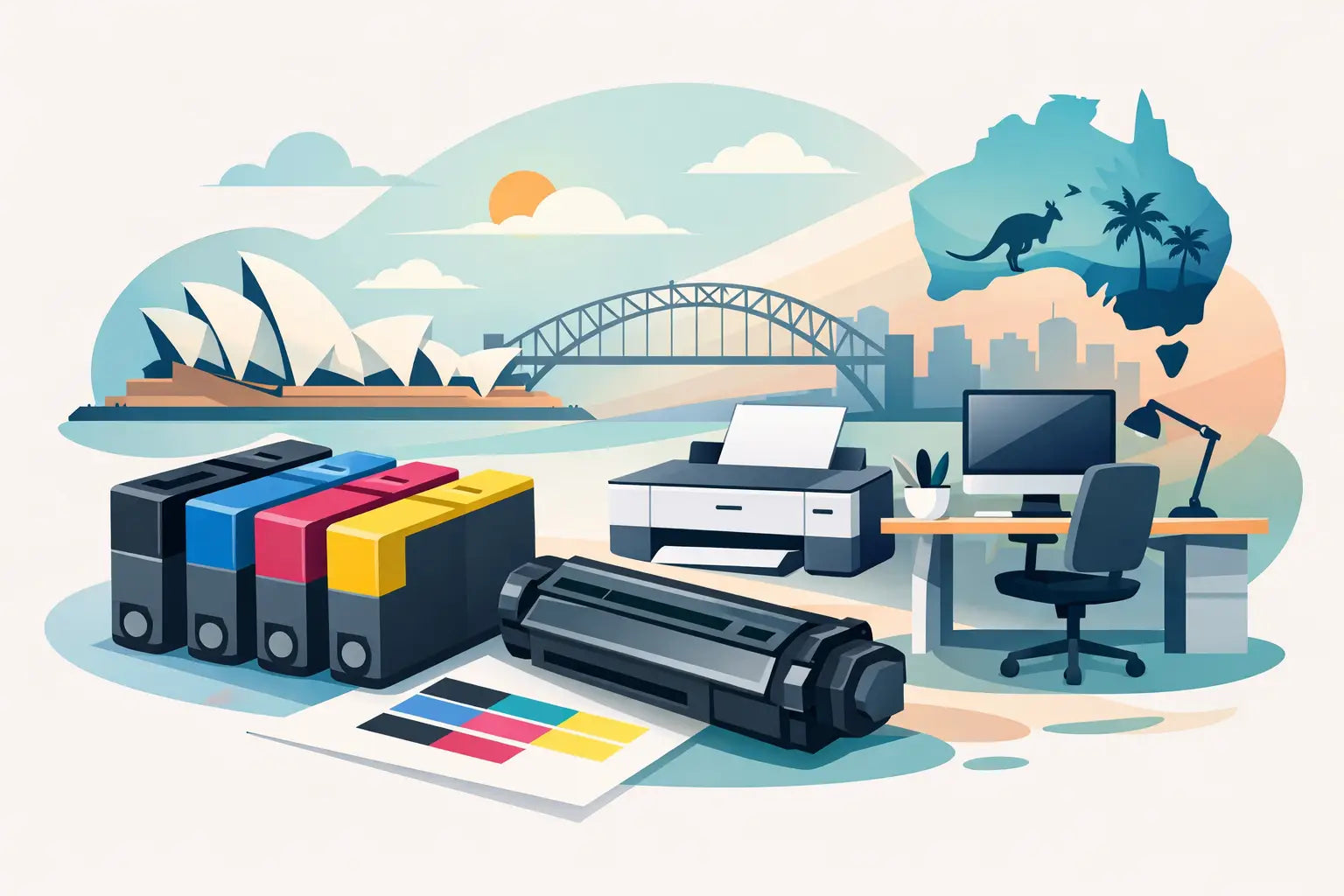
A home-office printer has a habit of running out of ink five minutes before an invoice, school form or client document needs to be printed. Finding the best cartridges for home offices is less about choosing the most expensive option and more about matching your printer, print habits and budget to the right supply.
For many Australian households and remote workers, that means choosing between genuine cartridges, compatible alternatives, standard yields and high-yield options. The right choice can lower your cost per page without leaving you with faded text, wrong colours or a cartridge that does not fit your printer.
How to choose the best cartridges for home offices
Start with the printer model, not the cartridge brand you remember buying last time. Cartridge names can look very similar across printer ranges, but one number or letter can make all the difference. Check the exact model on the front of the printer, inside the access panel or in its settings menu, then match it to the cartridge compatibility information.
This step matters particularly for home offices where several people use the same printer. A Brother inkjet, for example, may use individual colour cartridges, while a compact HP or Canon printer may use a black cartridge and a tri-colour cartridge. A laser printer from Samsung, Lexmark or Fuji Xerox will use toner rather than ink. Buying by printer model avoids the costly frustration of having a new cartridge that cannot be installed.
The next question is what you print most often. A consultant printing contracts and invoices needs sharp, reliable black text. A designer, teacher or small business preparing colour handouts may need consistent colour output. If your printer is used only occasionally, cartridge shelf life and the risk of dried printheads may matter more than page yield.
Ink cartridges suit lower-volume colour printing
Inkjet printers are common in home offices because they are compact, generally affordable and useful for both documents and colour pages. They are a sensible option if you print a mix of letters, labels, photos, worksheets or occasional marketing material.
The best ink cartridges for your setup depend on the printer design. Individual ink tanks can be economical because you replace only the colour that runs out. Printers using tri-colour cartridges can be convenient, but replacing a cartridge when just one colour is depleted can create more waste and expense.
If you print only a few pages each month, run a small test page periodically to keep ink moving through the printhead. Leaving an inkjet unused for months can cause clogging, even when there is still ink in the cartridge. For light users, it is usually better to buy what you are likely to use within a reasonable period than to stockpile multiple sets simply because they are on special.
Toner cartridges are often better for document-heavy work
Laser printers use toner, a fine powder rather than liquid ink. They are often the stronger choice for home offices that print lots of black-and-white paperwork, such as invoices, reports, training notes, shipping labels or contracts. Toner produces crisp text, handles regular workloads well and does not dry out in the same way ink can.
A mono laser printer with a high-yield black toner cartridge can offer a lower cost per page than many inkjet options. It may cost more upfront, and colour laser printers take up more space, but the maths can work in your favour when printing is frequent. If your printer sits unused for stretches, toner is also a practical option because it is less sensitive to inactivity.
Genuine or compatible cartridges: which is best?
Genuine cartridges are made by the printer manufacturer, such as HP, Canon, Epson or Brother. They are the straightforward choice for buyers who want manufacturer-branded supplies and predictable performance for specialised print work. They can be particularly worthwhile where colour matching, photo output or specific workplace requirements leave little room for variation.
Compatible cartridges are new cartridges made by a third party to work with a specific printer model. A quality compatible option can provide substantial savings for everyday home-office printing, especially where black text documents make up most of the workload. For many remote workers and small businesses, this is where the biggest ongoing savings are found.
The best option depends on what is at stake in each print job. Genuine cartridges may suit a photographer printing client proofs or a business producing colour-sensitive presentation material. Compatible cartridges can be an excellent value choice for everyday invoices, forms, draft reports and classroom resources. The key is buying from a specialist supplier that clearly identifies compatibility and stands behind its products.
Do not assume the cheapest cartridge is automatically the best value. Look at the stated page yield, the supplier’s returns policy and whether the cartridge is designed for your exact printer. A very low price is not useful if the cartridge has poor output or creates delays when you need to reprint important work.
Standard versus high-yield cartridges
High-yield cartridges, sometimes labelled XL, high capacity or extra high capacity, contain more ink or toner than standard versions. They usually cost more at checkout but can reduce the price per printed page. They also mean fewer cartridge changes, which is handy when your workday is already full.
High-yield options are usually a smart buy if you print every week, work from home full time or share the printer with family members. They are especially useful for black cartridges in offices that regularly print text documents.
Standard-yield cartridges are not a poor choice. They can make more sense when your printing is occasional, your budget is tight this month, or you are unsure how quickly you will use the cartridge. An infrequent inkjet user may prefer a standard cartridge over a large one that could sit unused for too long.
When comparing options, divide the cartridge price by its estimated page yield to get a rough cost per page. Page yields are based on standard test conditions, so treat them as a comparison tool rather than a promise. Full-page graphics, bold headings, photos and frequent cleaning cycles use more ink than a simple text page.
A practical cartridge checklist before you order
Before checking out, take a minute to confirm the details that prevent most ordering mistakes:
- Confirm the printer’s full model number, including any letters at the end.
- Check whether you need ink cartridges, toner, a drum unit or another separate consumable.
- Compare standard and high-yield versions based on how much you actually print.
- Decide whether genuine or compatible cartridges best suit the quality and budget requirements of your work.
- Check all colours before ordering, as one depleted colour can stop some inkjet printers from printing properly.
Common home-office cartridge mistakes
One common mistake is buying cartridges by printer brand alone. “Epson ink” or “HP toner” is not enough information because each brand supports many cartridge families. The exact printer model is always the safest starting point.
Another is mixing up colour requirements. If you mainly print black text, a mono laser printer and high-yield black toner may be the most cost-effective setup. If you often print colourful teaching resources or product sheets, make sure your printer and cartridge range can handle the colour workload economically.
It is also worth resisting the urge to ignore low-ink messages until printing stops. Ordering when the warning first appears gives you breathing room, particularly if a deadline is close. Keep one suitable spare only if you print regularly enough to use it, and store it in a cool, dry place away from direct sunlight.
For a simpler way to reorder, note the cartridge code once you have confirmed it is correct. Inkspot’s printer-model search can also help take the guesswork out of matching your printer with suitable genuine and compatible options.
The best cartridge is the one that fits your printer correctly, delivers the output your work requires and keeps your cost per page sensible. Take that extra minute to check your model and printing habits now, and the next urgent print job is far less likely to become a home-office headache.