
 Ink Brands
 Small Business Toner Guide for Smarter Buying

A toner cartridge that runs out halfway through invoices, training packs or a tender submission is more than an annoyance. It interrupts work and can lead to an expensive last-minute purchase. This small business toner guide explains how to buy the right toner with confidence, keep printing costs under control and avoid the common mistakes that create waste.
Start with the printer model, not the cartridge
The safest way to buy toner is to identify your exact printer model first. Printer families often use similar names, but the cartridges can be completely different. A cartridge made for one laser printer in a range may not fit the next model up, even when the machines look almost identical.
Check the label on the front or back of the printer, then confirm the model in the printer settings if needed. It is also worth checking the code on your current cartridge before ordering. Keep a photo of both details in your office records or on the mobile of whoever handles supplies. That simple habit makes repeat orders quicker and reduces the risk of ordering the wrong item.
Do not rely on the printer brand alone. HP, Brother, Canon, Lexmark, Samsung and Fuji Xerox printers all use model-specific toner cartridges. Searching by printer model is usually the most reliable route, particularly when a business has several devices.
Genuine vs compatible toner: choose for the job
Most small businesses have two sensible toner options: genuine cartridges made by the printer manufacturer, and compatible cartridges made by a third party for use in a specific printer model.
Genuine toner is the original manufacturer product. It can be a practical choice for businesses with strict procurement rules, specialised print requirements or a preference for using the brand-original supply from start to finish. Some businesses also choose genuine cartridges for a particular machine that produces customer-facing colour material where absolute consistency is their priority.
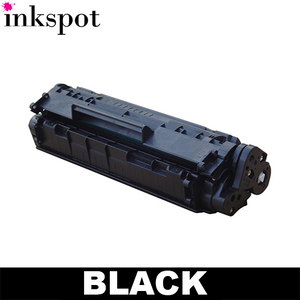
Compatible toner is designed to work with the same printer models at a lower purchase price. For everyday documents such as quotes, forms, reports, shipping labels and internal training material, a quality compatible cartridge can offer substantial savings. The key word is quality. Buy from a supplier that clearly states printer compatibility, stands behind its products and provides accessible support if something is not right.
The better choice depends on your workload, budget and tolerance for variation. There is no need to take an all-or-nothing approach. A business might use genuine toner for one specialised colour printer and compatible toner for high-volume black-and-white office printing.
Compare cost per page, not just cartridge price
A cheap cartridge is not always the lowest-cost option. To compare toner properly, look at the estimated page yield as well as the upfront price. Page yield is the approximate number of pages a cartridge can print under standard test conditions, usually based on limited page coverage.
Real-world results vary. A text-heavy invoice may use less toner than a page with large headings, shaded tables or graphics. Colour printing, photographs and marketing pieces will use considerably more. Still, page yield gives you a useful like-for-like measure.
Divide the cartridge price by its stated page yield to estimate the cost per page. If a standard cartridge costs $80 and yields 1,000 pages, the estimated cost is 8 cents per page. A high-yield cartridge at $120 that prints 2,500 pages works out at about 4.8 cents per page. The high-yield option costs more at checkout, but may be better value over its life.
When high-yield toner makes sense
High-yield, sometimes called XL or high-capacity toner, is usually worthwhile when your team prints regularly and has predictable demand. It means fewer cartridge changes, less ordering and a lower chance of running out during a busy week.
Standard-yield toner may be the better fit for a lightly used printer, a small office with limited storage or a machine that is nearing replacement. Toner does not need to be bought in bulk simply because a larger cartridge exists. Buy enough to maintain continuity without tying up cash in stock you may not use.
Plan for all colours in a laser printer
A colour laser printer normally uses four cartridges: black, cyan, magenta and yellow. One colour can run out ahead of the others depending on what your business prints. For example, a company using lots of blue branding may go through cyan sooner, while a business producing warm-toned promotional material may use more magenta and yellow.
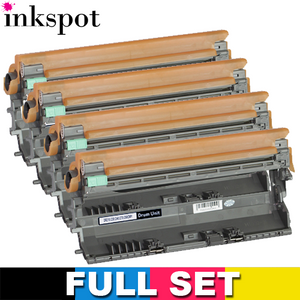
Before ordering, check which colours are low rather than automatically replacing the full set. On the other hand, buying a complete set can make financial sense if multiple colours are nearly empty or you regularly print colour documents. It also gives you a backup cartridge on hand for a colour that runs out unexpectedly.
Remember that colour printers can use colour toner even for documents that appear mostly black. Choose black-and-white mode for internal documents whenever colour is not needed. This small setting can noticeably extend the life of your colour cartridges.
Avoid the habits that make toner cost more
Printing costs are shaped by office habits as much as cartridge choice. Start by making double-sided printing the default for internal documents where appropriate. Set routine drafts to greyscale, and use print preview to catch blank pages, oversized images and unnecessary attachments before they reach the printer.
It also helps to match the printer to the task. A compact laser printer is excellent for frequent black text, but it is not necessarily the right device for high-volume brochures or photo-quality marketing collateral. Outsourcing occasional specialist print jobs can be more economical than consuming office toner trying to achieve a finish your machine was not built for.
Keep the printer in a clean, dry area and use the paper type recommended for the device. Damp or poor-quality paper can cause jams, streaking and reprints, which all add to your consumables bill. If print quality suddenly drops, check the cartridge status, paper tray and printer maintenance messages before assuming the toner is faulty.
Keep a simple toner reorder system
The best reorder system is one your team will actually follow. For a single printer, keep one spare black cartridge and reorder when it is installed. For a busier office, set a minimum stock level for each cartridge and nominate one person to monitor it.
A straightforward record should include the printer model, cartridge code, usual yield, date installed and date reordered. Over a few months, this tells you how quickly each printer consumes toner. You can then order before a cartridge becomes urgent, rather than paying extra or losing time to a rushed search.
If storage allows, keep unopened cartridges in their original packaging, away from direct sunlight, moisture and extreme temperatures. Avoid opening a cartridge until it is ready to install. This helps protect it from damage and keeps office supplies organised.
What to do if a new cartridge is not recognised
A printer message after installing toner can be frustrating, but it does not automatically mean the cartridge is defective. First, confirm that you have the correct cartridge for the exact printer model and that all protective seals or tabs have been removed according to the instructions.
Turn the printer off, remove the cartridge carefully and reinstall it firmly. Check whether the printer has any pending firmware updates or a message that gives more specific guidance. Do not force a cartridge into place or shake it aggressively. If the problem remains, contact the supplier with your printer model, cartridge code and a photo of the error message so support can help identify the cause.
Buying from an Australian specialist such as Inkspot gives small businesses a clearer path to compatible products, practical advice and support when an order needs checking. Free shipping over $50 and a 30-day money-back guarantee can also make routine replenishment less stressful.
A well-managed toner supply is not about filling a cupboard with cartridges. It is about knowing what each printer needs, ordering at the right time and choosing the option that makes sense for the work your business prints every day.