 Ink Brands
 Inkjet vs Laser Printing: Which Suits You?
A printer usually looks like a simple buy until you start replacing cartridges, waiting for pages to finish, or wondering why your photos look great but your invoices do not. That is where inkjet vs laser printing becomes a practical question, not just a technical one. The right choice depends less on the brand on the box and more on what you print, how often you print, and what you want your ongoing costs to look like.
For many Australians, the decision comes down to two things: print quality and running costs. Home users often want flexibility for schoolwork, forms and the occasional photo. Small businesses usually care more about speed, consistency and cost per page. Both printer types can be a good fit, but they suit different habits.
Inkjet vs laser printing: the basic difference
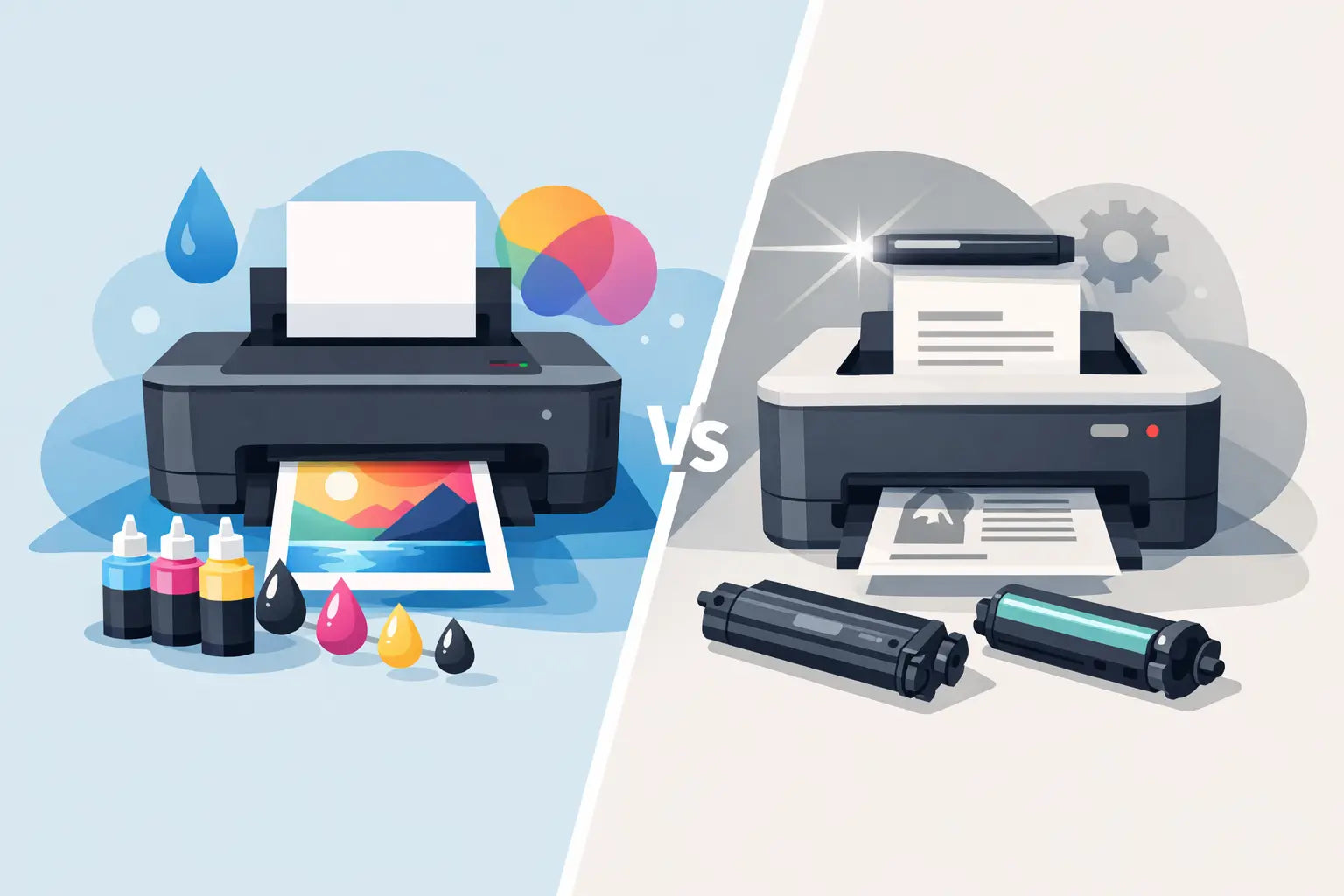
An inkjet printer sprays tiny droplets of liquid ink onto the page. A laser printer uses toner powder and heat to fuse text and images onto paper. That difference affects almost everything else, from the upfront printer price to how the finished page looks.
Inkjet printers are often cheaper to buy at the start. That makes them popular with households, students and anyone who prints in lower volumes. Laser printers usually cost more upfront, but they are often built for faster output and lower costs over time, especially if you print a lot of black text.
Neither technology is automatically better. It depends on your pattern of use. A cheap printer can become expensive if the cartridges run out quickly. A more expensive printer can work out better value if it handles your workload efficiently for years.
Where inkjet printing makes more sense
If your printing needs are varied, inkjet is often the more flexible option. It handles colour well and is generally the better choice for photos, graphics and documents where image quality matters. If you are printing school assignments with charts, marketing flyers for a local business, or family photos for an album, an inkjet printer usually gives you smoother colour transitions and better detail.
Inkjet printers also tend to be smaller, which matters in a home office, apartment or study nook where bench space is limited. For occasional printing, they can be a sensible low-cost entry point.
That said, there is a trade-off. Ink cartridges can work out more expensive per page than toner, especially if you print often. Inkjet printers can also be less happy sitting idle for long periods, because ink may dry in the printhead or cartridge system. If you only print once every few months, maintenance can become a factor.
Where laser printing comes out ahead
Laser printers are strong performers when speed, sharp text and efficiency matter most. If your day-to-day printing involves invoices, contracts, reports, shipping labels or worksheets, laser printers tend to be the easier and more economical option. Black text is crisp, pages print quickly, and toner generally lasts much longer than a typical ink cartridge.
This is why laser printers are common in offices and busy home workspaces. When several people need reliable document printing, the consistency is hard to ignore. Toner also does not dry out the way liquid ink can, which makes laser a practical choice if your printing is irregular but still important when it happens.
The main compromise is colour image quality. Colour laser printers are fine for business graphics and general-purpose colour documents, but they are not usually the first choice for high-quality photo printing. They also tend to be larger and more expensive to buy than entry-level inkjets.
Cost is not just the price of the printer
One of the biggest mistakes buyers make is focusing only on the upfront price. A low-priced printer can seem like a bargain until you start buying replacement cartridges every few weeks. When comparing inkjet vs laser printing, it makes more sense to look at total ownership cost over time.
For lower-volume home use, an inkjet printer may still be the cheaper option overall. If you print a few pages a week and occasional colour documents, the lower purchase price may outweigh the cartridge costs. But if you print hundreds of pages a month, laser usually starts to look more economical.
Cost per page is a useful way to think about it. Toner cartridges often print far more pages than standard ink cartridges, which helps spread the replacement cost over a larger number of documents. High-yield ink and toner options can improve value too, depending on the printer model.
This is also where cartridge choice matters. Many buyers look at genuine cartridges for peace of mind, while others prefer compatible options to reduce printing costs. There is no single answer that suits everyone. Some customers prioritise the manufacturer’s original product, while others are happy to save money with a well-matched alternative.
Print quality: text, colour and photos
If your priority is sharp black text, laser usually wins. Letters look clean and precise, which is ideal for business documents and everyday paperwork. For forms and reports, that difference can be more noticeable than many people expect.
If your priority is rich colour or photo output, inkjet usually has the edge. It is better at handling subtle shading, skin tones and image detail. That makes it a stronger option for creative projects, image-heavy schoolwork and photos printed at home.
For mixed use, the answer depends on what matters more. If you mostly print text with the occasional colour page, a laser printer may still be the better overall fit. If colour quality is central to what you print, an inkjet is often the safer choice.
Speed and convenience in real use
Printer speed matters more in a busy week than it does in a product listing. If you are printing one boarding pass or a recipe, a slight delay is no big deal. If you are printing payroll paperwork, customer forms or a class set of worksheets, speed starts to matter quickly.
Laser printers generally produce pages faster, especially in black and white. They are built for steady document output and often cope better with higher monthly volumes. In a small business setting, that can save time and frustration.
Inkjet printers are perfectly adequate for lighter use, but they are usually slower, particularly when printing high-quality colour pages or photos. If your printer is part of your daily workflow, that difference adds up.
So which one should you buy?
If you print mainly photos, colourful documents, school projects or occasional home paperwork, an inkjet printer is often the better match. It gives you strong colour performance and a lower starting price, which suits households and students well.
If you print mostly text documents, need faster output, or want better long-term economy for regular printing, a laser printer is usually the smarter buy. It is especially well suited to small businesses, home offices and anyone tired of replacing cartridges too often.
There are also mixed cases. A remote worker who prints contracts and occasional colour presentations might lean laser for efficiency. A family that prints homework, craft sheets and photos from time to time may get more value from inkjet. The right answer sits in your printing habits, not in a generic best-printer list.
Before you decide, check the cost and availability of replacement consumables for your specific model. That step is often overlooked, but it can make a bigger difference than the printer price itself. A dependable supplier with clear model matching, genuine and compatible options, and straightforward support can make ongoing printing much easier.
At Inkspot, that is exactly where many customers start to save money and avoid the usual cartridge confusion. Once you know whether your printing habits suit inkjet or laser, buying the right supplies becomes much simpler.
A good printer should feel boring in the best possible way - reliable, affordable to run, and ready when you need it. Choose the one that fits how you actually print, and you will notice the difference every time you hit print.