
 Ink Brands
 How to Store Ink Cartridges Properly
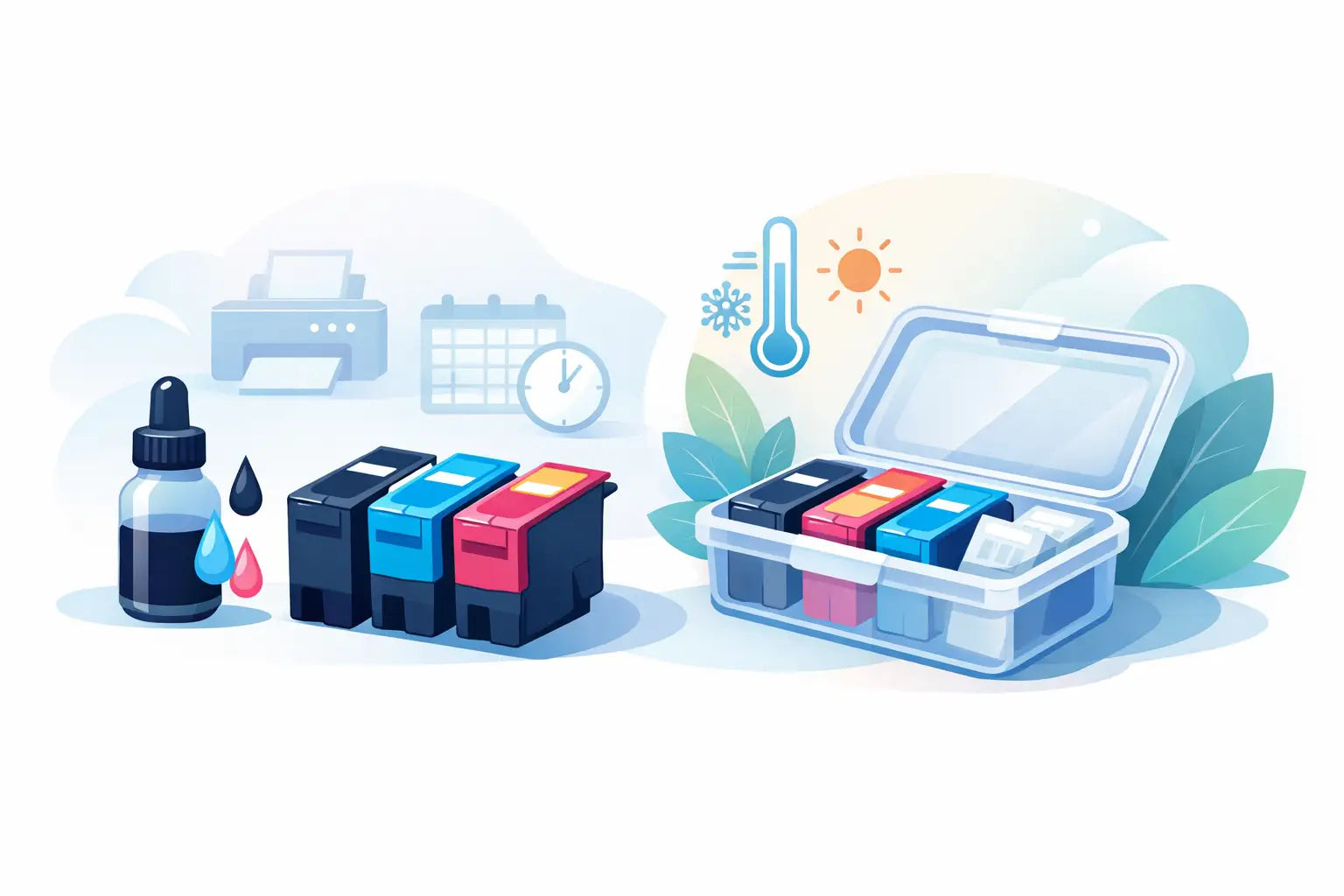
Buy a spare cartridge at the right time and it feels smart. Find it six months later, dried out or leaking in the back of a cupboard, and it suddenly feels expensive. If you’ve ever wondered how to store ink cartridges so they still work when you need them, the good news is that the basics are simple. The trick is keeping them sealed, stable and away from the kind of heat and air that shortens their shelf life.
Why proper ink cartridge storage matters
Ink cartridges are sealed products, but they’re not indestructible. Inside each cartridge is liquid ink designed to flow in a very controlled way through your printer. If the cartridge is stored badly, that ink can thicken, separate, dry around the outlet, or in some cases leak. Even if a cartridge looks fine from the outside, poor storage can affect print quality once it’s installed.
That matters whether you print once a week at home or keep a few spares in the office to avoid downtime. Genuine and compatible cartridges both benefit from proper storage, although shelf life can vary by brand and design. A cartridge that sits untouched in a hot study, garage or sunny windowsill is far more likely to cause problems than one kept in a cool cupboard in its original packaging.
How to store ink cartridges in the right environment
The best place to store unopened ink cartridges is indoors, in a cool, dry area with a fairly steady temperature. Think of a cupboard, drawer or shelf in the house or office rather than a shed, attic or car boot. Extreme heat can damage the cartridge and affect the ink, while very cold conditions can also cause issues, especially if the cartridge then warms up too quickly.
Humidity matters as well, but temperature is usually the bigger problem in Australian conditions. A cupboard near an oven, heater or window can get much hotter than you’d expect. If the room is comfortable for you year-round, it’s usually a safer bet for cartridges too.
Direct sunlight is another thing to avoid. Sun and heat together can shorten shelf life, and the packaging itself won’t always offer much protection if it’s left exposed.
Keep cartridges in their original packaging
If the cartridge hasn’t been opened yet, leave it in the sealed box or foil pack until you’re ready to use it. Manufacturers package cartridges this way for a reason. The packaging helps control exposure to air and light and protects the printhead area, contacts and outlet ports from damage.
Opening a cartridge early, even just to check it, usually does more harm than good. Once the protective seal is broken, the risk of drying out starts to increase. That’s especially true for inkjet cartridges with integrated printheads or exposed nozzles.
If you’ve bought cartridges in bulk to save money, it can be tempting to remove the boxes and stack them loose in a drawer. It saves space, but it’s not the best trade-off. Original packaging gives each cartridge the best chance of staying in usable condition.
Store them upright when possible
If the packaging shows an upright orientation, follow it. Many cartridges are designed to be stored standing upright, particularly inkjet cartridges. This helps keep the internal pressure and ink position as intended by the manufacturer.
That said, the original box usually supports the right position, so if the cartridge is boxed and undisturbed, you generally won’t need to overthink it. The main issue is avoiding random loose storage where a cartridge gets flipped, squeezed or knocked around over time.
Opened cartridges need a different approach
Once an ink cartridge has been unsealed, the clock starts moving faster. If you remove a cartridge from the printer and plan to use it again later, storage becomes less straightforward. Some printers and cartridges tolerate short-term removal better than others, but in general, opened cartridges are best returned to the printer as soon as possible.
If you must store a partially used cartridge, keep the nozzle or printhead protected according to the manufacturer’s instructions. Some cartridges have an original cap or clip that can be reused. If not, the safest move is to minimise air exposure and keep the cartridge upright in a sealed container for a short period only. Be careful not to touch the chip, copper contacts or nozzles.
This is one of those situations where it depends on the cartridge design. A sealed, unopened spare can often sit safely for many months. An opened cartridge removed from the printer may start causing trouble much sooner.
Where not to store ink cartridges
People usually don’t ruin cartridges by doing something dramatic. More often, they store them somewhere convenient that turns out to be the wrong spot.
The garage is a common example. It might seem like a good place for office supplies, but temperatures can swing wildly. The same goes for sheds, roof spaces and cars. A desk drawer right beside a heater or in full afternoon sun can be just as risky.
The fridge is another bad idea. Cold storage sounds logical to some people, but it can lead to condensation when the cartridge comes back to room temperature. Moisture around electrical contacts is not something you want.
A better rule is simple: if the area gets very hot, very cold or very damp, don’t store your cartridges there.
Check expiry dates, but don’t panic about them
Many cartridges have a date printed on the box, although the wording varies. Sometimes it’s an expiry date, sometimes it’s a warranty end date, and sometimes it’s more of a recommended install-by date. These dates are worth checking, especially if you’re buying spares for long-term use.
That said, a cartridge does not automatically become useless the day after the printed date. Storage conditions make a real difference. A well-stored cartridge may still work perfectly fine after that date, while a poorly stored one may fail much earlier.
If you regularly keep spare supplies on hand, it helps to rotate stock. Use older cartridges first and put newly delivered ones behind them. It’s a simple habit that reduces waste and keeps your printing more predictable.
How to store ink cartridges for home and office use
For home users, the best setup is usually a cupboard or drawer in a room with stable indoor temperatures. Keep cartridges together, boxed, upright and away from appliances that generate heat. If you only print occasionally, it’s worth checking your spare stock every few months so you know what you have before a school assignment or urgent form needs printing.
For offices, storage tends to get messier because multiple people access supplies. A dedicated shelf or storage tub in the stationery cupboard works well, as long as it’s indoors and not overfilled. Labelling by printer model can also save a lot of confusion. There’s nothing more annoying than opening a spare in a rush and realising it belongs to a different machine.
If your business runs several printers, buying ahead can make financial sense, especially when balancing genuine and compatible options across different devices. The key is not overbuying beyond what you’ll realistically use within a sensible timeframe.
Signs a stored cartridge may have gone bad
A cartridge can look normal and still perform poorly, but there are a few warning signs. Damaged packaging, dried ink around the outlet, leaks, or visible swelling are all red flags. If the cartridge has been exposed to extreme temperatures, it may also be unreliable even if there’s no obvious external damage.
Once installed, bad storage often shows up as streaky prints, missing colours, inconsistent lines or printer recognition errors. Those issues can also come from printer maintenance problems, so it’s not always the cartridge alone. Still, if an old spare has been sitting in poor conditions, storage is a likely factor.
If you’re unsure whether a cartridge is still suitable, it’s often better to replace it than risk wasted paper, poor print jobs and extra troubleshooting time.
A few practical habits that help
The easiest way to avoid storage issues is to keep things boring. Store cartridges indoors, leave them sealed until needed, and don’t treat them like general stationery. Ink is a consumable, but it’s a sensitive one.
It also helps to buy from a supplier that clearly identifies the right cartridge for your printer, so you’re less likely to end up with surplus stock that sits around unused. For many households and small businesses, that matters just as much as the storage itself.
A properly stored cartridge won’t guarantee perfect printing forever, but it gives you the best chance of getting full value from every spare you buy. When ink isn’t cheap, that’s well worth the small effort.