
 Ink Brands
 Cartridge vs Tank Printers - Which Costs Less?
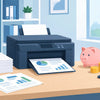
A cheap printer can become an expensive one if its replacement ink costs more than you expected. That is the real question behind cartridge vs tank printers: are you better off paying less at the checkout, or spending more upfront to reduce your cost per page over time?
For Australian households, students and small businesses, there is no single winner. Cartridge printers remain a sensible, convenient choice for plenty of people. Tank printers can deliver impressive long-term savings, but only when you print often enough to justify their higher purchase price and keep the printer in regular use.
Cartridge vs Tank Printers: The Main Difference
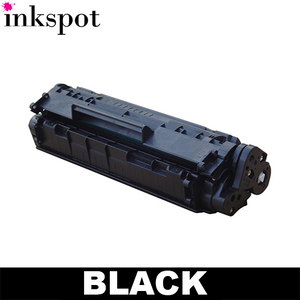
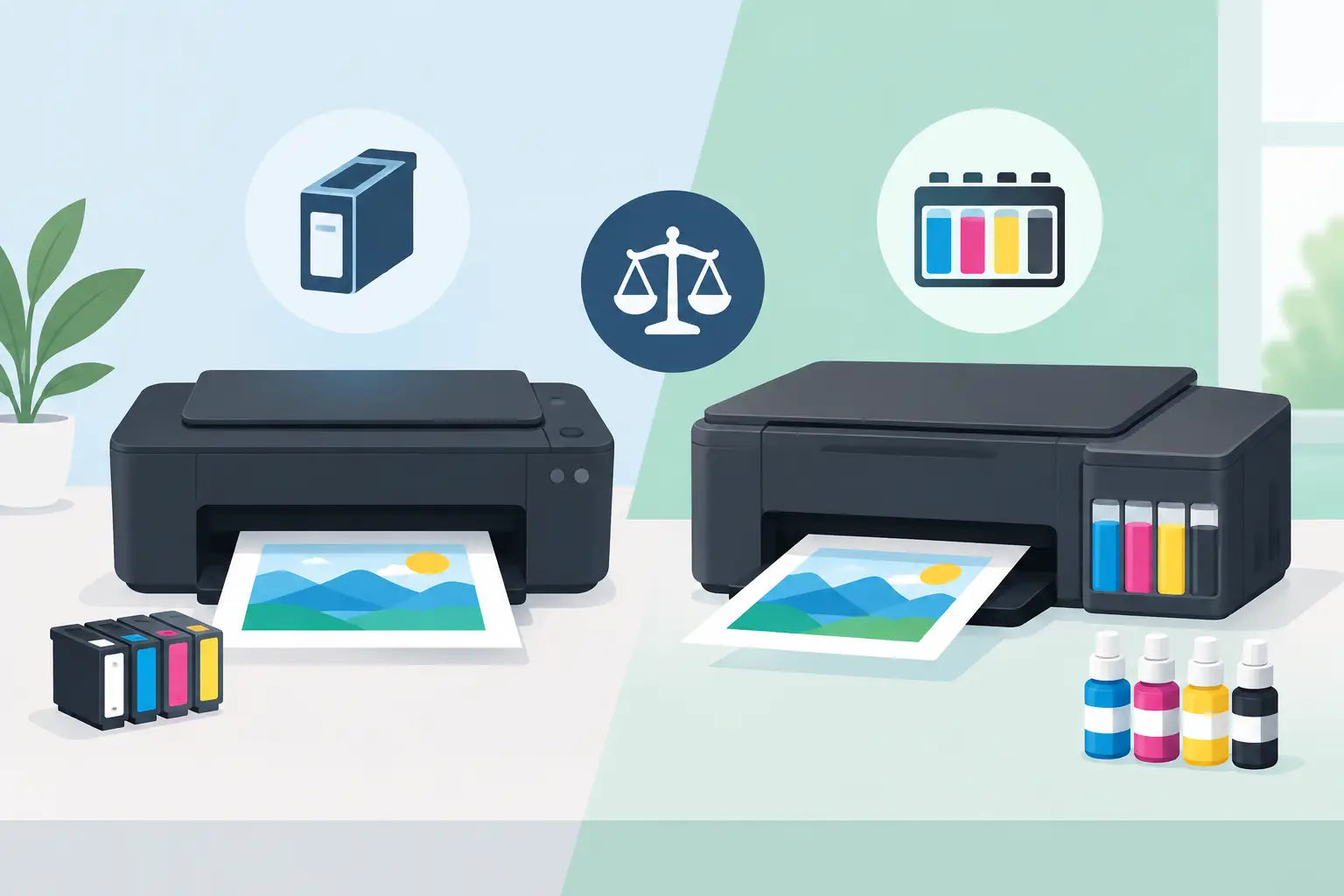
A cartridge printer uses replaceable ink cartridges. When a colour or black cartridge runs low, you remove it and install a new one. Depending on the model, cartridges may contain separate colours or a combined tri-colour cartridge. They are widely available, simple to fit and familiar to most printer owners.
A tank printer has built-in ink reservoirs that you fill from bottles. The bottles generally hold far more ink than standard cartridges, and manufacturers commonly include enough ink in the box for thousands of pages. This makes the printer dearer to buy, but potentially much cheaper to run.
The difference is not just the container. Cartridge printers are built around a replace-and-print routine. Tank printers are designed for volume, with the higher initial spend offset by lower-cost refill bottles.
Upfront Price Versus Ongoing Costs
Cartridge printers usually win on purchase price. If you need a basic printer for occasional school forms, travel documents or a few invoices each month, a cartridge model may cost considerably less than a comparable tank printer.
The trade-off appears when it is time to replace the ink. Genuine cartridges are convenient and can produce excellent results, but their page yield is limited. A printer that costs very little upfront may need replacement cartridges sooner than expected, particularly if you print photographs, colourful worksheets or marketing material.
Tank printers often cost more at the start, sometimes by a substantial amount. Their refill bottles, however, normally offer a much lower cost per page. For a home office printing contracts and shipping labels each week, or a small business producing regular paperwork, those savings can add up quickly.
A useful way to judge the value is to estimate your annual print volume. If you print only 20 black-and-white pages a month, the payback period on a tank printer could be a long one. If you print several hundred pages each month, it may recover its higher purchase price far sooner.
Do not compare printer prices alone
Before choosing a printer, check the price and quoted page yield of its black and colour consumables. Divide the consumable price by the expected yield for a rough cost-per-page figure. It will not be exact - page yields are measured under standard test conditions, while photos and graphics use more ink - but it gives you a realistic comparison.
Also look at whether the printer uses separate colour cartridges. With a tri-colour cartridge, one depleted colour can mean replacing the entire cartridge even if the other two colours still have ink left. Separate cyan, magenta and yellow cartridges can reduce waste for users who print a lot of colour.
When a Cartridge Printer Makes More Sense
Cartridge printers are not outdated or automatically costly. They are often the more practical choice for low-volume printing, especially when space, purchase budget and simplicity matter.
They suit people who print irregularly but want a compact machine ready for the occasional task. Many cartridge printers are small enough for a study nook or home office shelf, and the replacement process is straightforward. Find the correct cartridge for your printer model, install it and get back to work.
They can also be the safer option for users who need a specific printer feature rather than high-volume output. You may want an affordable all-in-one device with scanning, copying, automatic document feeding or specialist photo printing. In these cases, buying the right printer for the job can matter more than chasing the absolute lowest ink cost.
Ongoing cartridge costs do not have to be a surprise. Choosing high-yield cartridges where available can lower your cost per page, and compatible alternatives can offer a more budget-friendly option for many printer models. The key is to buy supplies matched to your exact printer, rather than selecting based on a cartridge number that looks similar.
When a Tank Printer Is Worth the Extra Spend
A tank printer is usually best for consistent, higher-volume printing. Think busy households with school-aged children, tutors, small offices, online sellers printing packing slips, and businesses that regularly produce forms, reports or colour handouts.
The large ink supply is its biggest appeal. You will generally replace ink less often, and refill bottles are typically cheaper per page than cartridges. Less frequent replenishment can be particularly handy if running out of ink mid-job causes real disruption.
Tank printers can be a strong option for colour-heavy work too. If you print classroom resources, product information sheets, presentations or photos often, their running costs can be far more manageable than those of many entry-level cartridge machines.
There is one condition: use it. Inkjet printers benefit from regular printing because ink can dry in the printhead or nozzles when left unused for long periods. A tank printer sitting idle for months may need cleaning cycles, which use ink and may not always solve a blockage. If you only print a handful of pages every few months, the theoretical savings may never materialise.
Print Quality, Speed and Maintenance
Neither system automatically produces better prints. Print quality depends more on the particular printer, the paper you use, print settings and whether you choose inks suited to the task. A good cartridge printer can produce sharp text and vibrant images, while a good tank printer can do the same.
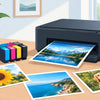
For documents, most modern inkjets will meet everyday home and office needs. For photo prints, check the printer's intended use and supported paper types. Some models are made for economical document printing, while others use extra photo colours for better tonal detail.
Maintenance is where your routine matters. Cartridge printers can be easier to manage for occasional users because replacing a cartridge is quick and contained. Tank printers require care when refilling to avoid spills, and some users may find that process less convenient. On the other hand, frequent cartridge buyers may prefer the longer intervals between tank refills.
Do not assume a tank printer is maintenance-free simply because it has more ink. Cleaning cycles, firmware messages and printhead issues can still occur. Read the manufacturer's instructions, print a page now and then, and use good-quality paper stored away from humidity.
Choosing for Home, Study or a Small Business
Start with your real printing habits, not the printer's sale price. A student who prints assignments a few times each semester has different needs from a bookkeeper printing daily records. A family printing a weekly newsletter and occasional forms is different again from a home-based business sending dozens of invoices.
Choose a cartridge printer if you want a lower upfront cost, print occasionally, have limited desk space or need a particular compact all-in-one model. It can be a cost-effective setup when you select suitable cartridges and avoid replacing the printer simply because the first set of ink runs low.
Choose a tank printer if you print regularly, produce lots of colour pages, want fewer ink replacements and can afford the higher initial price. It is especially compelling where printing is part of the weekly workflow rather than an occasional chore.
For either type, keep a spare black ink supply on hand if you rely on your printer for work or school. Ordering before the cartridge or bottle is completely empty is simpler than scrambling when an urgent document is due. Inkspot can help Australian customers identify compatible supplies by printer model, making it easier to choose the right replacement without guesswork.
The best printer is the one whose costs and upkeep match how you actually print. Buy for your usual workload, use it regularly, and you will get far better value than by choosing solely on the price tag.