 Ink Brands
 Standard vs XL Cartridges: Which Saves More?

If you have ever stood at the checkout wondering why one cartridge costs less upfront but another promises more pages, you are not alone. The standard vs XL cartridges question comes up all the time, especially when you are trying to keep printing costs under control without ending up with the wrong product.
The short answer is that XL cartridges usually offer better value per page, but they are not automatically the best buy for everyone. Your printer, how often you print, and even what you print all affect whether paying more upfront actually saves you money.
Standard vs XL cartridges: what is the difference?
The main difference between standard and XL cartridges is page yield. A standard cartridge contains less ink or toner and is designed for lower-volume printing. An XL cartridge contains more, so it can print more pages before needing replacement.
That sounds simple enough, but the confusion usually starts when customers compare shelf prices instead of overall value. A standard cartridge often looks cheaper because the initial purchase price is lower. An XL cartridge costs more upfront, yet in many cases it works out cheaper over time because the cost per printed page is lower.
This is why cartridge labels often mention estimated page yield. That figure gives you a rough guide to how many pages the cartridge can print under standard test conditions. It is not a guarantee, because real-world use varies, but it is still one of the best ways to compare like for like.
Why XL cartridges often cost less in the long run
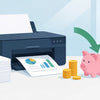
If you print regularly, XL cartridges can reduce your running costs quite a bit. The reason is straightforward: manufacturers usually price XL cartridges so that the extra pages cost less than buying multiple standard cartridges.
For example, a standard cartridge might print 200 pages, while the XL version prints 500. The XL may not cost two and a half times as much, even though it prints two and a half times more. That gap is where the savings often sit.
There is also a convenience factor. Fewer cartridge changes mean less interruption, less time spent reordering, and less chance of running out in the middle of something important. For a home office, small business, or anyone printing schoolwork, invoices, labels, or reports, that matters more than people sometimes expect.
When standard cartridges still make sense
Even though XL cartridges often offer better value, there are situations where standard cartridges are the smarter choice.
If you print only occasionally, a standard cartridge may be more practical. Someone who prints a few forms each month, occasional return labels, or the odd travel document may not use enough ink to benefit from the larger cartridge before replacing the printer or changing printing habits.
Upfront budget matters too. If the immediate cost is your main concern, a standard cartridge can be easier to manage, even if the long-term cost per page is higher. That does not make it a bad choice. It just means you are prioritising lower spend now over lower spend later.
There is also the issue of printer lifespan. If your printer is older and may be replaced soon, buying an XL cartridge could leave you with more ink than you end up using. In that case, the cheaper standard option can be the safer bet.
Standard vs XL cartridges for home users
For home users, the best option depends on routine. A student printing assignments every week or a remote worker printing documents regularly will usually benefit from XL cartridges. The lower running cost and reduced hassle make a real difference over a semester or financial year.
On the other hand, if your printer mostly sits idle and only comes out for occasional admin jobs, standard cartridges may be enough. The higher yield of an XL cartridge only pays off if you actually use it.
This is where it helps to be honest about your printing habits. Many people think they print “not that much” until they add up homework, permission slips, online returns, forms, recipes, and work documents. If the printer gets regular use, XL is often worth a closer look.
Standard vs XL cartridges for small business
For businesses, XL cartridges are often the more economical option. Offices tend to print more consistently, and frequent cartridge replacements can become a hidden cost in both money and time.
If you are printing invoices, packing slips, customer paperwork, or internal documents, higher-yield cartridges generally make sense. They reduce downtime and often lower your cost per page, which matters when printing is part of everyday operations.
That said, not every business prints heavily. A trade business that mostly works on mobile and prints only a few documents a week might not see the same benefit as a busy admin team. Again, it comes back to volume.
What page yield numbers really mean
Page yield figures are useful, but they are based on standardised testing rather than real-life printing. That means your actual result may be lower or higher depending on what you print.
If most of your pages are simple black text, you are more likely to get close to the stated yield. If you print photos, graphics, presentations, or documents with heavy coverage, the cartridge will empty faster. Print quality settings can also make a difference.
So while yield figures are the right place to start, they should be treated as a comparison tool rather than a promise. They help you judge standard vs XL cartridges on a more meaningful basis than shelf price alone.
Does XL mean better print quality?
No. In most cases, XL cartridges do not improve print quality compared with the standard version of the same cartridge series. They are designed to print more pages, not better pages.
If you are comparing genuine cartridges with the same brand and range, the print quality should be similar whether you choose standard or XL. The same goes for compatible options made to suit that cartridge type, assuming you are buying from a supplier that takes quality seriously.
The real choice is about yield, convenience, and cost efficiency rather than output quality.
Genuine and compatible options matter too
There is another layer to the standard vs XL cartridges decision, and that is whether you choose genuine or compatible cartridges.
Genuine cartridges are made by the printer brand. Compatible cartridges are made by third-party manufacturers to work with specific printer models. For many customers, compatibles are a practical way to lower printing costs further, especially when paired with XL yield.
This can create a much bigger price difference than standard versus XL alone. For example, a compatible XL cartridge may offer far better value than a genuine standard cartridge, particularly for everyday document printing. Still, some users prefer genuine products for brand consistency, firmware considerations, or personal preference.
There is no one-size-fits-all answer. The right choice depends on your printer, budget, and comfort level.
How to choose the right cartridge for your printer
Before buying, check three things: your printer model, your average print volume, and your budget over time.
Your printer model comes first because not every printer supports both standard and XL versions. Some do, some do not, and cartridge numbers can be very similar, which is where mistakes happen.
Then think about usage over the next few months, not just this week. If you are likely to print regularly, an XL cartridge is usually worth considering. If printing is rare and unpredictable, standard may be enough.
Finally, look beyond the upfront price. A cartridge that seems cheaper today may cost you more per page and require replacing sooner. For plenty of Australian households and small businesses, that is where overspending happens.
So which one should you buy?
If you print often, want fewer interruptions, and care about long-term value, XL cartridges are usually the better buy. If you print lightly, want the lowest upfront spend, or may replace the printer soon, standard cartridges can still be the right choice.
The smartest purchase is not always the cheapest box on the page. It is the one that matches how you actually use your printer. If you are unsure, taking a minute to compare yield and compatibility can save you a fair bit over time.
Printing supplies should not feel harder than they need to be. Once you know how standard and XL cartridges differ, the decision gets much simpler and a lot more cost-effective.