
 Ink Brands
 Is It Safe to Use Compatible Ink Cartridges?
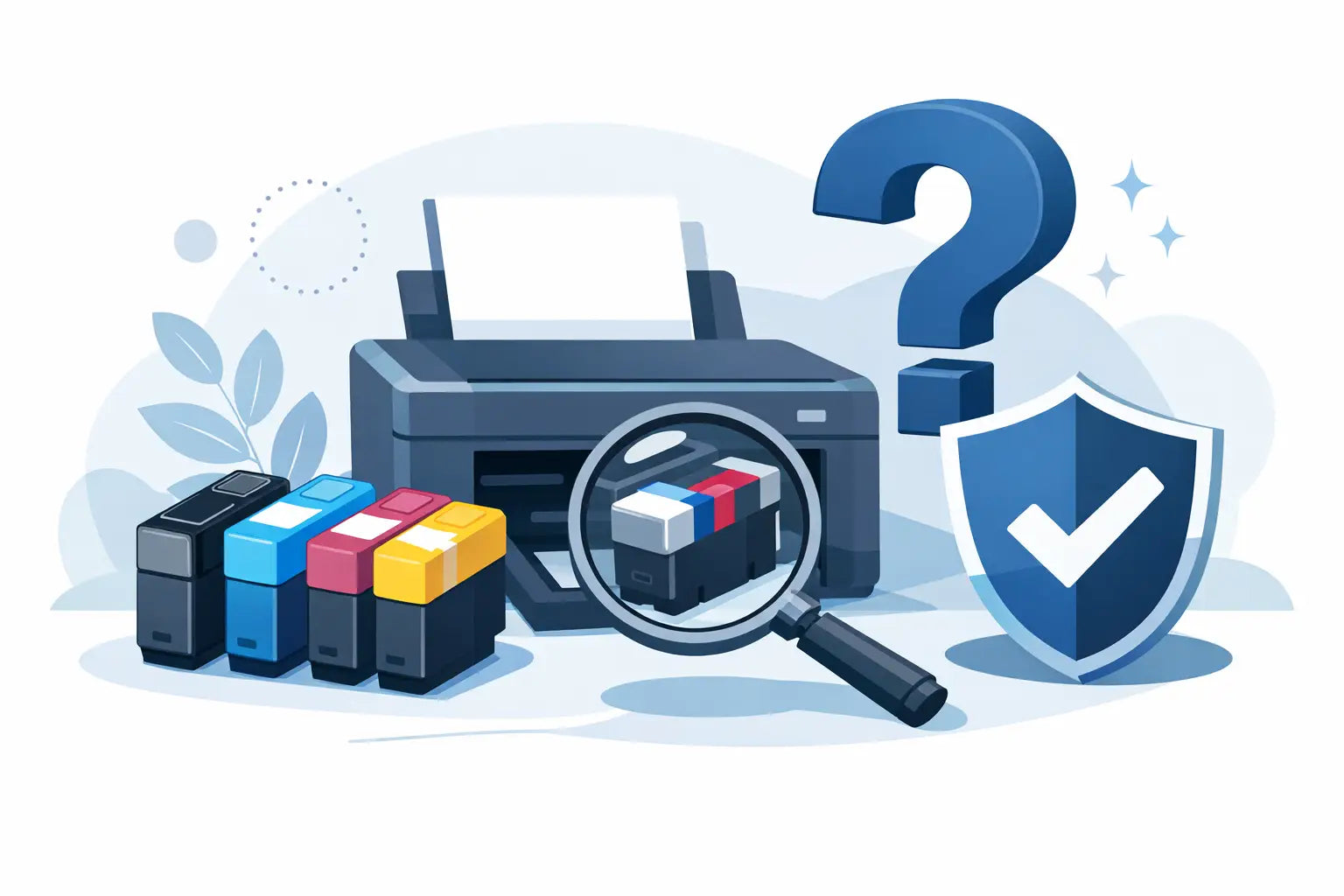
You do not need to own a busy office to feel the sting of printer ink prices. One minute you are printing school notes, invoices or shipping labels, and the next you are wondering whether a cheaper cartridge will damage the printer. If you have asked, is it safe to use compatible ink cartridges, the short answer is yes - often it is - but the full answer depends on the cartridge, the printer and where you buy it.
For most home users and small businesses, compatible cartridges are a practical way to cut printing costs without giving up everyday print quality. The catch is that not all compatibles are made to the same standard. A well-made cartridge from a trusted supplier is very different from a no-name product with inconsistent ink, poor chip performance or loose manufacturing tolerances.
Is it safe to use compatible ink cartridges in any printer?
Compatible ink cartridges are third-party cartridges made to work with specific printer models. They are not produced by the original printer manufacturer, but they are designed to fit and function in the same machine. That alone does not make them unsafe.
In many cases, compatible cartridges work perfectly well for standard printing. If the cartridge has been properly designed and tested for your printer model, the risk is usually low. Plenty of Australians use compatible cartridges every day for homework, reports, forms, receipts and office documents with no trouble at all.
Where people run into problems is usually not because a cartridge is compatible, but because it is poor quality, the wrong fit, or not suited to the way the printer is used. A printer that only gets used once every few weeks can be more prone to drying or clogging regardless of whether you use genuine or compatible ink. On the other hand, a regularly used printer often handles compatible cartridges just fine.
What are the real risks?
It helps to separate myth from genuine risk. Compatible cartridges do not automatically break printers. That is one of the biggest misunderstandings in this category. Printers are built to accept ink through a cartridge system, and a correctly made compatible cartridge uses that same pathway.
That said, there are some trade-offs to be aware of. Print quality can vary between brands, especially for photo printing or colour-critical work. A cheap cartridge may also have a lower-quality chip, which can cause recognition issues or inaccurate low-ink warnings. In some cases, inconsistent ink formulation can contribute to clogging, particularly in inkjet printers that are left idle for long periods.
Leaks are another concern people worry about, and fairly so. A badly assembled cartridge can leak, but this is a manufacturing quality issue rather than something inherent to all compatibles. Reputable suppliers reduce this risk by sourcing cartridges that are built to fit properly and perform consistently.
Warranty is often raised as well. In Australia, using a compatible cartridge does not automatically void your consumer rights or your printer warranty. If a printer fault is unrelated to the cartridge, the manufacturer cannot simply reject support because you used a third-party consumable. If a specific cartridge genuinely causes damage, that is a different matter. This is one reason it pays to buy from a seller that stands behind what it sells.
Why compatible cartridges are cheaper
There is a reason so many buyers consider them in the first place. Genuine cartridges can be expensive because printer manufacturers often subsidise the hardware and recover their margins through consumables. That business model is not new, and it is why replacement ink can sometimes feel wildly overpriced compared with the cost of the printer itself.
Compatible cartridges are usually cheaper because third-party manufacturers do not carry the same brand overheads. They are focused on producing a cartridge that works with an existing printer rather than funding the whole printer ecosystem. For budget-conscious households and businesses, that price difference can be substantial over time.
If you print frequently, the savings can add up quickly. For a home office, a school-age family or a small business printing every week, moving to a quality compatible range can make ongoing printing much more affordable.
When compatible cartridges make good sense
If your printing is mostly text documents, worksheets, forms, labels, internal reports or day-to-day admin, compatible cartridges are often a very sensible choice. They can deliver strong value without asking you to pay premium prices for routine output.
They also make sense for older printers. If your machine is a few years old and out of warranty, many people feel more comfortable switching to compatibles because the cost savings are easier to justify. For businesses managing several printers, the cumulative savings can be even more appealing.
Where you may want to be more selective is with high-end photo printing, design proofs or brand-critical marketing materials where exact colour matching matters. In those situations, genuine cartridges may still be the better fit because colour consistency can be more predictable.
How to tell if a compatible cartridge is a safe buy
The safest approach is not just choosing a compatible cartridge. It is choosing the right compatible cartridge from a reliable supplier.
Start by checking that the cartridge is matched to your exact printer model, not just the brand series. A cartridge that is close enough is not good enough. The right fit matters for installation, chip recognition and print performance.
Then look at the seller. A trustworthy retailer should make compatibility clear, explain the difference between genuine and compatible options, and offer support if something goes wrong. A proper returns policy or money-back guarantee is also a good sign, because it shows the seller is confident in the product.
Product consistency matters too. Cartridges sourced through established supply channels are generally more reliable than random marketplace listings with little detail and no after-sales support. When you are comparing options, the cheapest listing on the internet is not always the best value if it causes printer errors or poor prints a week later.
A few simple ways to reduce problems
Even good cartridges perform better when the printer is looked after. If you use an inkjet printer, regular use helps keep ink flowing and reduces the chance of dried printheads. Printing a page every week or two can make a difference, especially if your printer tends to sit idle.
Install cartridges carefully and remove any protective tape or clips before use. It sounds obvious, but missed packaging pieces are a common cause of recognition and print issues. You should also store spare cartridges in a cool, dry place and avoid buying more than you are likely to use over a long period.
If a new cartridge is not recognised straight away, it does not always mean the cartridge is faulty. Sometimes reinstalling it, powering the printer off and on, or running a cleaning cycle will solve the issue. If not, this is where buying from a supplier with real customer support matters.
Genuine vs compatible: which should you choose?
This is where the honest answer is, it depends. Genuine cartridges are the safe default if you want brand-matched consumables, especially for specialist printing or if your printer is new and you prefer to stay fully within the manufacturer ecosystem.
Compatible cartridges are a strong option if your priority is lowering print costs and your printing needs are more practical than specialised. For many users, that is exactly the case. Everyday printing does not always require premium-priced consumables.
The decision usually comes down to how you print, how often you print, and how much you want to spend over the life of the printer. There is no single right answer for everyone, but there is a right answer for your setup.
So, is it safe to use compatible ink cartridges?
Yes, for most people it is safe to use compatible ink cartridges when they are properly matched to the printer and bought from a reputable supplier. The main risk is not the idea of compatibility itself. It is poor-quality manufacturing, unclear compatibility, and buying from sellers who disappear when there is a problem.
That is why the smartest move is to focus less on whether a cartridge is genuine or compatible, and more on whether it is reliable, well supported and right for your exact printer. For plenty of Australian homes and businesses, quality compatible cartridges are a sensible way to keep printing costs under control without making life harder.
If you want to save money on ink, you should not have to guess. A dependable supplier with clear compatibility information, straightforward support and a fair returns policy can make the choice much easier - and a lot less risky.