
 Ink Brands
How to Recycle Toner Cartridges in Australia
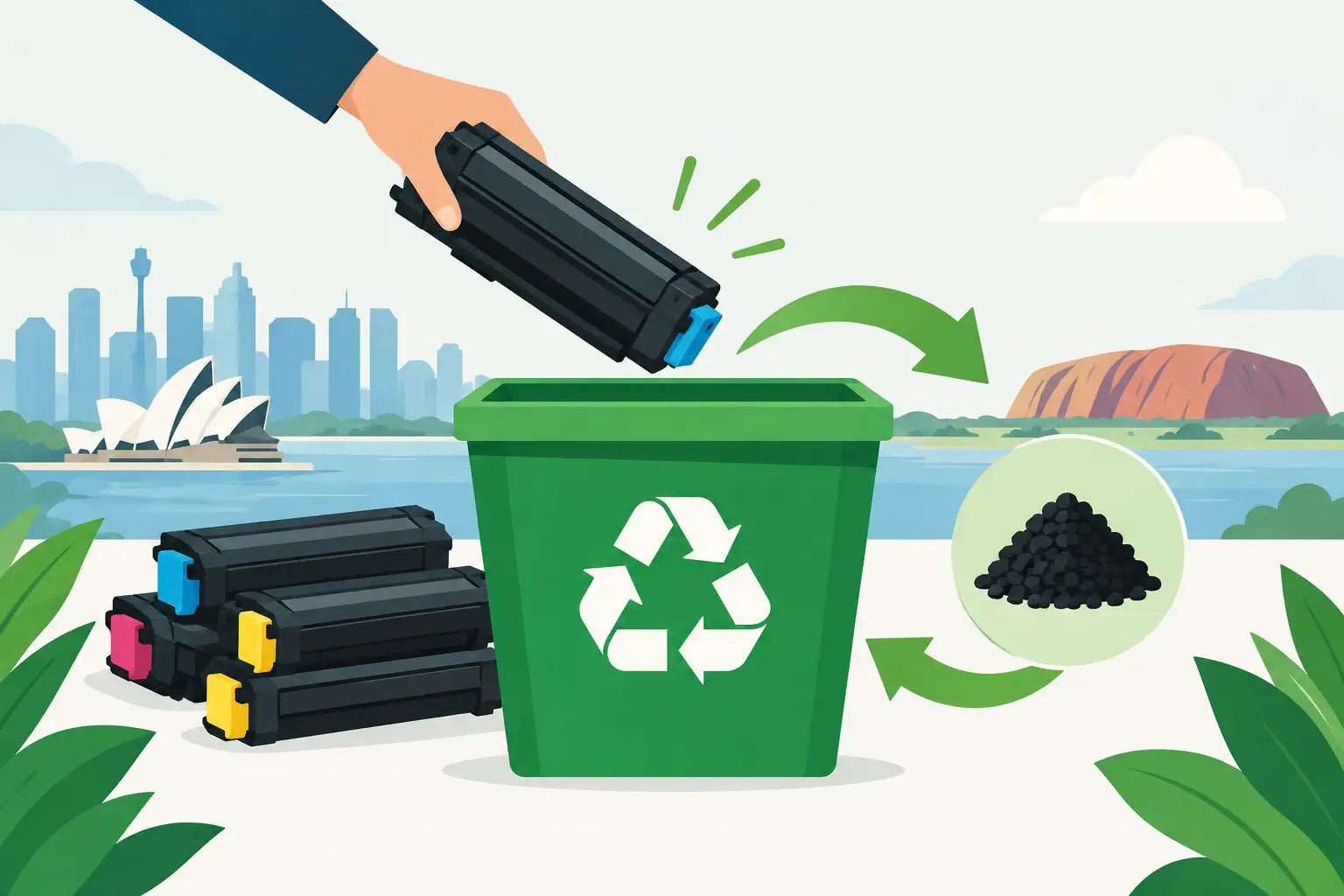
A spent toner cartridge might look like a small piece of office rubbish, but it is made from plastic, metal, foam and residual toner powder that should not go in your household bin. Knowing how to recycle toner cartridges gives those materials a better chance of being recovered, while keeping unnecessary waste out of landfill.
For Australian homes, schools and workplaces, the process is usually straightforward: store the empty cartridge safely, use an approved cartridge collection point or return service, and replace it with the right cartridge for your printer. The key is not to treat every collection option as interchangeable. What a program accepts can vary by cartridge type, brand and location.
Why toner cartridges should not go in the rubbish bin
Laser printer toner cartridges are built to be durable. Their hard plastic casing, internal gears and rollers, metal components, and fine toner residue make them poorly suited to a standard kerbside recycling bin. Mixed recycling facilities are designed for common household materials such as paper, cardboard, glass, tins and suitable plastics - not complex printer consumables.
When a toner cartridge is placed in the yellow-lidded bin, it may be rejected during sorting and sent to landfill. It can also cause problems for recycling equipment. Putting it in general rubbish avoids that sorting issue, but still wastes materials that may be reused, remanufactured or recycled through a specialist program.
Specialist recycling is the better option because cartridges can be dismantled in a controlled setting. Recovered plastic and metal may be processed into new products, while suitable empty cartridges may be remanufactured for another printing cycle. The outcome depends on the cartridge’s condition and the recycler’s process, but either route is preferable to tossing it in the bin.
How to recycle toner cartridges safely
Start by removing the cartridge carefully from your printer. If the printer has displayed a low-toner warning, you may still have a little print life left, so there is no need to replace it before print quality actually drops or the machine indicates that it is empty. Toner levels are estimates, and replacing too early creates avoidable waste and expense.
Once it is ready to go, place the old cartridge in the box from your replacement cartridge if you still have it. If not, use a sturdy box or bag to protect it during storage and transport. Keep the cartridge upright where possible, particularly if it has a toner waste container or visible openings. This reduces the chance of loose powder escaping.
Avoid pulling apart the cartridge yourself. Fine toner powder can be messy and difficult to clean, and the internal components can be sharp or delicate. A recycler or remanufacturer has the equipment to handle it properly.
Before dropping it off, check that the collection point accepts your specific item. Most programs take common printer ink and toner cartridges, but larger imaging units, drum units, bottles, label-printer supplies and other printer parts may have different arrangements.
Use a dedicated cartridge collection program
Dedicated printer-cartridge recycling programs are often the simplest choice for households and small offices. In Australia, selected retailers and participating locations provide collection boxes for eligible ink and toner cartridges. Cartridges 4 Planet Ark is one well-known example, with collection points available at participating sites.
Take the cartridge to the collection point in a bag or box, then place it in the designated collection box if it is accepted. Do not leave cartridges beside the box or on a shop counter unless staff advise you to do so. Collection programs need cartridges kept contained and separated from ordinary waste.
Because participating locations and accepted products can change, confirm the current requirements before making a special trip. This is particularly useful if you have a large business-grade toner cartridge, a cartridge from an older printer, or a mixed batch of supplies.
Ask your workplace or building manager
If your office prints regularly, a workplace collection system can be more practical than asking staff to take cartridges home. Many businesses arrange a box in the print room, stationery cupboard or mail area, then nominate one person to organise collection when it is full.
This approach works especially well for small-to-medium businesses that use several printers or buy toner in volume. It keeps used consumables together, makes recycling part of the normal replacement process and prevents empty cartridges from disappearing into desk drawers or rubbish bins.
For larger sites, speak with your managed print provider, office-supplies provider or waste contractor. They may offer a return method, bulk collection or advice on handling high-volume toner waste. The right option depends on how many cartridges you use and whether you need collection records for internal sustainability reporting.
Check manufacturer return options
Some printer manufacturers operate return or mail-back programs for their own genuine cartridges. These can be convenient when you use one brand consistently, particularly if packaging includes a return label or return instructions.
There is a trade-off: manufacturer programs may only accept their branded original cartridges, whereas an independent collection program may accept a broader range. If you use compatible or remanufactured toner cartridges, always check eligibility rather than assuming a manufacturer will take them back.
What about compatible and remanufactured toner cartridges?
Compatible cartridges are newly manufactured alternatives designed for particular printer models. Remanufactured cartridges use an original empty casing that has been inspected, cleaned, rebuilt and refilled. Both can offer a cost-effective way to keep printing costs under control, but they should still be handled as specialist waste when empty.
Whether a recycler accepts them depends on its program. Some accept both genuine and compatible cartridges; others have tighter rules. Do not place a compatible cartridge in a collection box marked for a specific manufacturer unless the program says it is allowed.
The same principle applies to refilling. Refilling may suit some cartridge types and printing habits, but it is not always the best choice. A damaged, leaking or worn cartridge shell may not be suitable for another cycle. A reputable recycler or remanufacturer can assess what can be recovered without compromising safety or print performance.
Keep cartridges in good condition before recycling
A cartridge does not need to look brand-new to be recycled, but sensible handling helps. Store empty cartridges indoors, away from heat, moisture and direct sunlight. Do not stack heavy items on top of them or leave them rolling around in the boot of a car.
If a cartridge is leaking, avoid breathing in toner dust and keep children and pets away from the area. Wear gloves if practical, place the cartridge in a sealed bag or container, and contact the relevant recycling provider for instructions. Do not use a standard household vacuum cleaner on toner spills, as fine powder can pass through filters and spread further. A slightly damp cloth is usually better for small surface residues, provided you do not rub the powder into fabric or porous surfaces.
It also helps to keep the protective cap, orange clip or sealed bag that came with a replacement cartridge. These pieces are designed to protect the cartridge during transport and can make returning the empty unit cleaner and easier.
Make recycling part of buying replacement toner
The easiest time to plan recycling is when you order the next cartridge. Keep a small box near the printer for used cartridges, and put the empty one straight in after installing the replacement. Once you have a few, take them to an approved collection point or arrange your workplace return.
Just as importantly, make sure your replacement matches your printer model. Ordering the wrong toner means extra freight, delayed printing and a cartridge that cannot be used. Checking the printer model before ordering, rather than relying only on the old cartridge’s appearance, helps avoid that frustration. Inkspot’s printer finder can help Australian customers identify compatible toner options when it is time to replace a cartridge.
A single empty cartridge will not transform your waste footprint, but the habit adds up across a household, school or busy office. Put a collection box beside the printer, check the approved recycling route before it fills, and let every replacement be a small practical step away from landfill.