 Ink Brands
Ink Bottles Versus Cartridges: Which Costs Less?
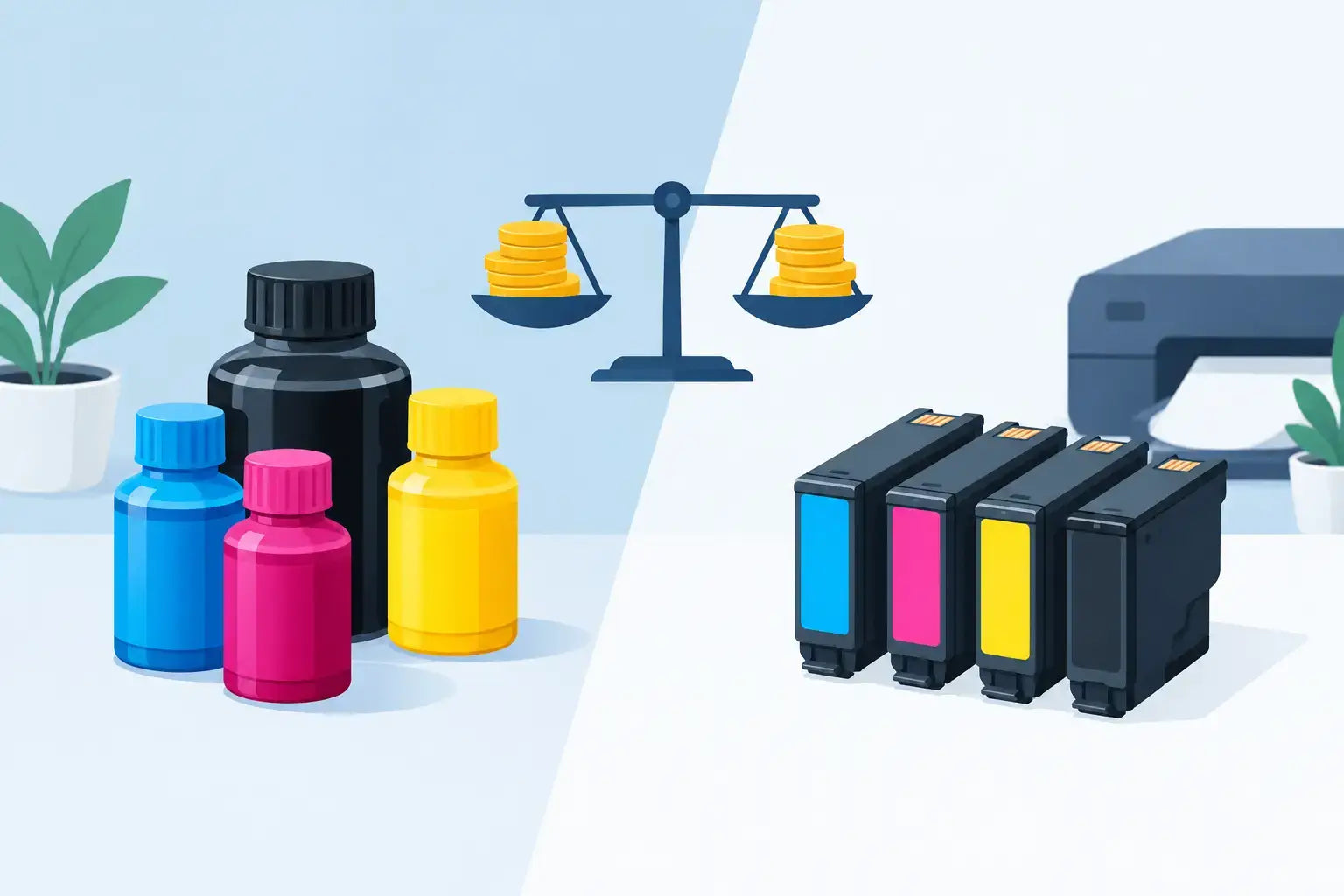
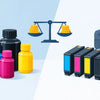
A printer that costs less at the checkout can cost more every time you print. That is why the ink bottles versus cartridges question is worth asking before you choose a printer, rather than when you are already staring at a low-ink warning. Both systems can produce excellent documents and photos, but they suit different printing habits, budgets and levels of hands-on maintenance.
For many Australian homes and small businesses, cartridges remain the simpler option. Ink tank printers, which use refillable ink bottles, can be extremely economical for people printing large volumes. The right choice comes down to what, how often and how much you print.
Ink bottles versus cartridges: how the systems differ
Ink cartridge printers use sealed, replaceable cartridges that slide or click into the printer. When one runs out, you remove it and fit a new one. Depending on the model, black and colour inks may be separate, or the three colour inks may sit in a single tri-colour cartridge.
Bottle-based printers, often called ink tank, MegaTank or EcoTank printers, have built-in reservoirs. Instead of replacing a cartridge, you open the relevant tank and refill it with a matching bottle of ink. These printers are usually sold with a substantial amount of ink included, which helps explain their higher upfront price.
The two systems are not interchangeable. You cannot pour bottled ink into a standard cartridge printer, and you should only use bottles made for your exact ink tank printer. Ink formulations, bottle nozzles and tank designs vary between brands and models. Using the wrong ink can affect print quality and may damage the printer.
Upfront price versus ongoing printing costs
The biggest advantage of ink bottles is their low running cost. A bottle generally contains much more ink than a cartridge and often delivers thousands of pages. For a home office producing regular invoices, worksheets, shipping labels and draft documents, those savings can add up quickly.
The trade-off is the purchase price. An ink tank printer commonly costs more than an equivalent cartridge printer. If you print only a few pages each week, it may take a long time to recover that difference. A low-cost cartridge printer can make better financial sense for occasional printing, particularly if its cartridges are readily available in standard and high-yield options.
When comparing costs, avoid looking only at the price of a replacement item. Check its page yield, which is the manufacturer’s estimated number of pages under standard testing conditions. Divide the cartridge or bottle price by the stated yield for a useful cost-per-page guide. Your actual result will vary, especially if you print photos, dense colour graphics or documents with large black headings.
High-yield cartridges are another worthwhile middle ground. They cost more than standard cartridges upfront but usually provide a lower cost per page and reduce how often you need to replace them. For many small offices, this is enough to make cartridge printing economical without moving to an ink tank printer.
Convenience is more than the refill process
Replacing a cartridge is quick, clean and familiar. You open the printer, remove the empty unit, install the replacement and follow any prompts on screen. It is a practical setup for households that print now and then, students working on assignments, and workplaces that need staff to change supplies without fuss.
Refilling a tank is no longer as messy as it once was. Many newer bottle systems use keyed nozzles that only fit the correct tank, helping prevent spills and colour mix-ups. Even so, refilling takes a little more care. Ink can stain hands, clothing and benchtops, so it pays to work slowly and keep paper towel nearby.
There is another convenience factor that is easy to miss: availability when you need to print. Bottle printers need refilling less often, which is useful for busy offices. Cartridge printers need more frequent replacement, but keeping a spare black cartridge on hand can prevent last-minute disruption. The best approach is the one you are likely to manage consistently.
Print quality and reliability
Both ink bottles and cartridges can produce sharp text and vivid colour when matched to a well-maintained printer. Print quality depends on the printer model, the ink type, the paper and the settings you select. A good printer using plain copy paper will not produce the same photo result as quality photo paper, regardless of whether it uses bottles or cartridges.
For everyday documents, either system is more than capable. If you print family photos, marketing materials or client-facing work, consider the printer’s specific colour performance and supported media before buying. Some photo-focused printers use additional inks for smoother tones and better detail.
How often you print matters too. Inkjet printers can develop blocked nozzles if left unused for long periods. This can happen with both cartridge and tank models, although a tank printer holds more ink and may be a bigger investment to leave idle. If you print only once every month or two, run a small test page periodically and follow the printer’s maintenance prompts.
Waste and storage considerations
Ink tank printers create less packaging waste over time because one bottle replaces the ink contained in several cartridges. This can be appealing for offices printing high volumes. They also reduce the number of replacement items that need to be ordered, stored and recycled.
Cartridges generate more packaging and empty units, but they are compact, easy to store and straightforward to swap. Where recycling options are available, avoid placing used cartridges in general rubbish. Keeping supplies in a cool, dry cupboard and in their sealed packaging until needed will also help protect ink from heat and air exposure.
It is worth remembering that lower waste does not automatically mean an ink tank printer is the better environmental choice for every person. Buying a larger, more expensive printer that is rarely used may not be as sensible as choosing a reliable cartridge model that fits your actual needs and lasts well.
Which printer setup suits your printing habits?
An ink bottle printer is usually the stronger choice if you print heavily and predictably. This includes home-based businesses producing forms or labels, schools printing classroom resources, and offices with a steady flow of documents. The lower cost per page can be compelling once the printer has earned back its higher purchase price.
Cartridges are often better for light to moderate printing, especially when convenience matters most. They also offer more choice across entry-level printers, compact home models and specialised devices. If your printer is already cartridge-based, the decision is simpler: buy the correct cartridges for its model rather than attempting any bottle refill workaround.
For cartridge users, you can further tailor costs to your needs. Genuine cartridges are made by the printer manufacturer and are a sensible choice for buyers who prefer brand-original supplies. Compatible cartridges are manufactured by a third party for use in selected printer models and can offer a more budget-friendly alternative. The key is checking compatibility carefully and buying from a supplier that clearly identifies the printers each cartridge fits.
At Inkspot, using the printer-model search tool is an easy way to avoid ordering the wrong cartridge. Before checking out, confirm the printer’s full model name, not just the brand. Similar-looking printer ranges can use completely different cartridges.
Make the choice based on your real print volume
There is no universal winner between bottles and cartridges. A high-volume printer can make bottles remarkably cost-effective, while a cartridge printer can be easier, cheaper to buy and more practical for occasional use. Start with the pages you genuinely print in a month, allow for colour printing and factor in how comfortable you are with refilling tanks.
Choose the system that keeps printing affordable without creating extra work. A printer is at its most useful when it is ready when you need it, with the right ink close by and no surprises at the worst possible time.