 Ink Brands
Canon Ink Review: Is Genuine Ink Worth It?
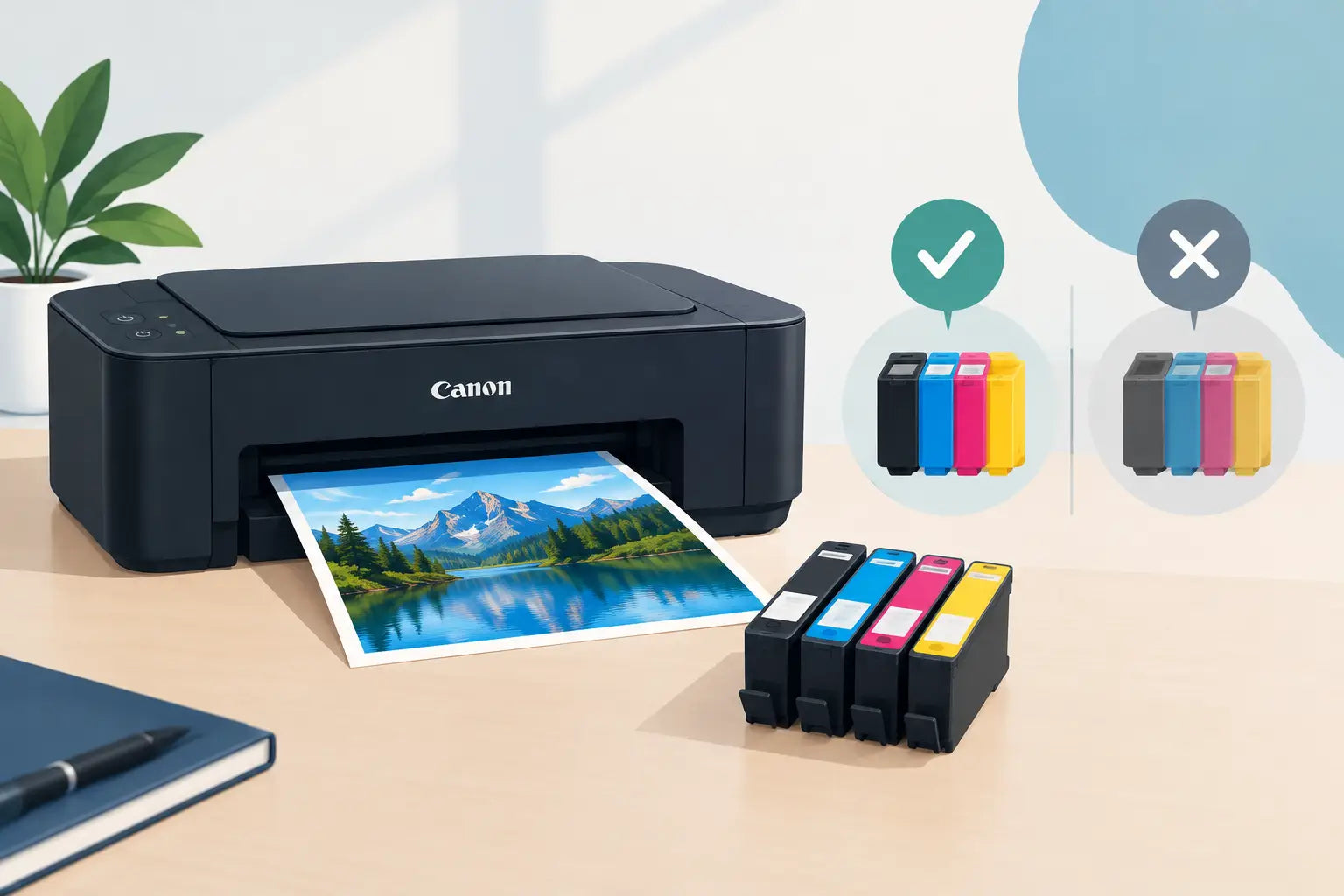
A cheap printer can become an expensive printer surprisingly quickly. That is often the reality behind a Canon ink review: the printer itself may be great value, but replacing a set of cartridges can feel disproportionate to the cost of the machine. The good news is that Canon users have options. Choosing between genuine and compatible ink comes down to what you print, how often you print and how much certainty you need from every page.
Canon has built a strong reputation for sharp document text, rich photo colours and straightforward home printing. Its cartridge and tank systems cover everything from the occasional school assignment to busy small-office paperwork. But not every Canon ink option suits every household or business, so it pays to look beyond the label and compare cost, yield and expected performance.
Canon ink review: what makes Canon ink different?
Canon genuine ink is designed specifically for Canon printers and the cartridge series they use. That can include familiar black and colour cartridge pairs, individual colour cartridges, high-yield XL cartridges and bottled ink for MegaTank printers.
The main advantage is consistency. Genuine Canon ink is formulated to work with the printer's print head, paper settings and maintenance routines. For people printing family photos, colour-sensitive marketing material or documents that need to look the same every time, that consistency has real value. Colours are generally accurate, text is crisp and the printer is less likely to display cartridge-recognition messages.
Canon's ink systems vary by printer range. Many PIXMA home printers use combined tri-colour cartridges alongside black cartridges, while other models use separate cyan, magenta, yellow and black tanks. Separate tanks can be more economical when one colour runs out before the others. MegaTank models use refillable bottles and are designed for very low running costs over a high volume of printing.
There is no single "best" Canon ink. A person printing a few forms each month has different needs from an office printing invoices every day. Start with your exact printer model and cartridge number, rather than assuming cartridges that look similar will fit.
Genuine Canon ink: where it earns its price
Genuine cartridges are usually the lower-risk choice. They are made for the printer, straightforward to install and supported by the manufacturer. If your printer is still under warranty, is used for client-facing work or is relied on for regular photo printing, original Canon cartridges can offer useful peace of mind.
Photo printing is where genuine ink often has the clearest edge. Canon's photo inks and papers are designed to work together, helping produce smooth colour transitions, strong blacks and prints intended to resist fading when stored correctly. Results will still depend on the printer model and paper, but genuine consumables remove one variable from the equation.
The trade-off is cost. Standard-capacity cartridges can have a high cost per page, especially in compact printers. They also tend to run out at inconvenient times, as anyone who has started printing school work at 9 pm can confirm. If you print regularly, XL or high-yield genuine cartridges usually provide better value than buying standard cartridges repeatedly. They cost more upfront but contain more ink and reduce how often you need to replace them.
Compatible Canon cartridges: the value case
Compatible cartridges are new cartridges made by a third party for use in selected Canon printers. They are not refilled used cartridges, although refill products are another category altogether. A quality compatible cartridge can deliver dependable everyday printing at a noticeably lower cost than an original equivalent.
For home users, students, remote workers and small businesses printing invoices, forms, shipping labels, worksheets or draft documents, compatible Canon ink can make a lot of financial sense. Black text is usually the priority in these jobs, and a well-made compatible can produce clean, professional-looking results while lowering the ongoing cost of printing.
The important phrase is "well-made". Compatible quality is not identical across every supplier or cartridge range. The cheapest option is not always the best value if it has poor page yield, inconsistent colour or causes recognition issues. Buying from an Australian specialist supplier that clearly matches cartridges to printer models, offers support and stands behind its products helps reduce that risk.
At Inkspot, the choice is kept simple: customers can select genuine Canon supplies when manufacturer-original ink is the priority, or compatible alternatives when reducing print costs is the goal. Either way, checking the printer model before ordering is the quickest way to avoid an expensive mismatch.
Will compatible ink affect your printer warranty?
This concern is common, and it deserves a practical answer. Using a compatible cartridge does not automatically cancel your printer warranty. However, if a printer fault is directly caused by a non-genuine consumable, the manufacturer may not cover that particular repair.
For that reason, buyers with a new, high-value printer may prefer genuine cartridges during the warranty period. Others are comfortable using compatible cartridges for routine printing, particularly once the printer is outside warranty. Keep cartridges stored correctly, follow installation instructions and avoid forcing a cartridge into the carriage. These basics matter whichever ink you choose.
Print quality, page yield and price: compare the right things
Cartridge price alone is a poor way to judge value. A lower-priced cartridge may contain less ink, while a higher-priced XL cartridge may offer a lower cost per printed page. Page yield is a better starting point, but it is still an estimate based on standardised test pages with modest coverage.
A page containing a short black email uses very little ink. A full-page colour flyer, a detailed map or a borderless photo uses far more. If your household prints lots of colour school projects or your business produces colourful promotional material, actual yield can be well below the figure on the box.
When comparing genuine and compatible Canon ink, consider these three questions:
- Is the printer mainly used for everyday documents, colour graphics or photographs?
- Do you print often enough to benefit from XL cartridges or a MegaTank printer?
- Is the potential saving worth a small amount of extra uncertainty around colour matching or printer prompts?
Getting better results from any Canon cartridge
Ink choice matters, but printer habits matter too. Leaving an inkjet printer unused for months can allow ink to dry in the print head, leading to streaks or missing colours. Printing a small colour page every week or two is a simple way to keep ink moving through the system.
Use the right paper setting before printing. Plain-paper settings use less ink and are appropriate for everyday documents. Selecting photo paper when you are using ordinary copy paper can oversaturate the sheet, slow printing and waste ink. For photos, use quality photo paper and allow prints to dry fully before stacking them.
Avoid running cartridges completely dry. Canon printers monitor ink levels for a reason: continuing to print after a cartridge is empty can affect print quality and, in some printer designs, place unnecessary strain on the print head. Replacing a low cartridge promptly is usually cheaper than troubleshooting poor output later.
It is also worth being cautious with printer cleaning cycles. A nozzle check can identify a problem with minimal ink use, while repeated deep-cleaning cycles consume a significant amount of ink. Run a normal clean first and only move to deeper maintenance if the issue persists.
Which Canon ink option is right for you?
Genuine Canon ink is the straightforward choice for maximum compatibility, reliable photo quality and manufacturer-designed performance. Compatible cartridges are often the smarter buy for cost-conscious document printing, as long as they are sourced carefully and matched to the correct printer.
If you print regularly enough to notice cartridge costs, do not just replace the same cartridge by habit. Check whether an XL version is available, compare the stated yield and consider whether a MegaTank printer would suit your next printer purchase. A few minutes spent matching the ink to the job can keep your pages looking right without making every print cost more than it should.