
 Ink Brands
 Are Compatible Cartridges Safe to Use?
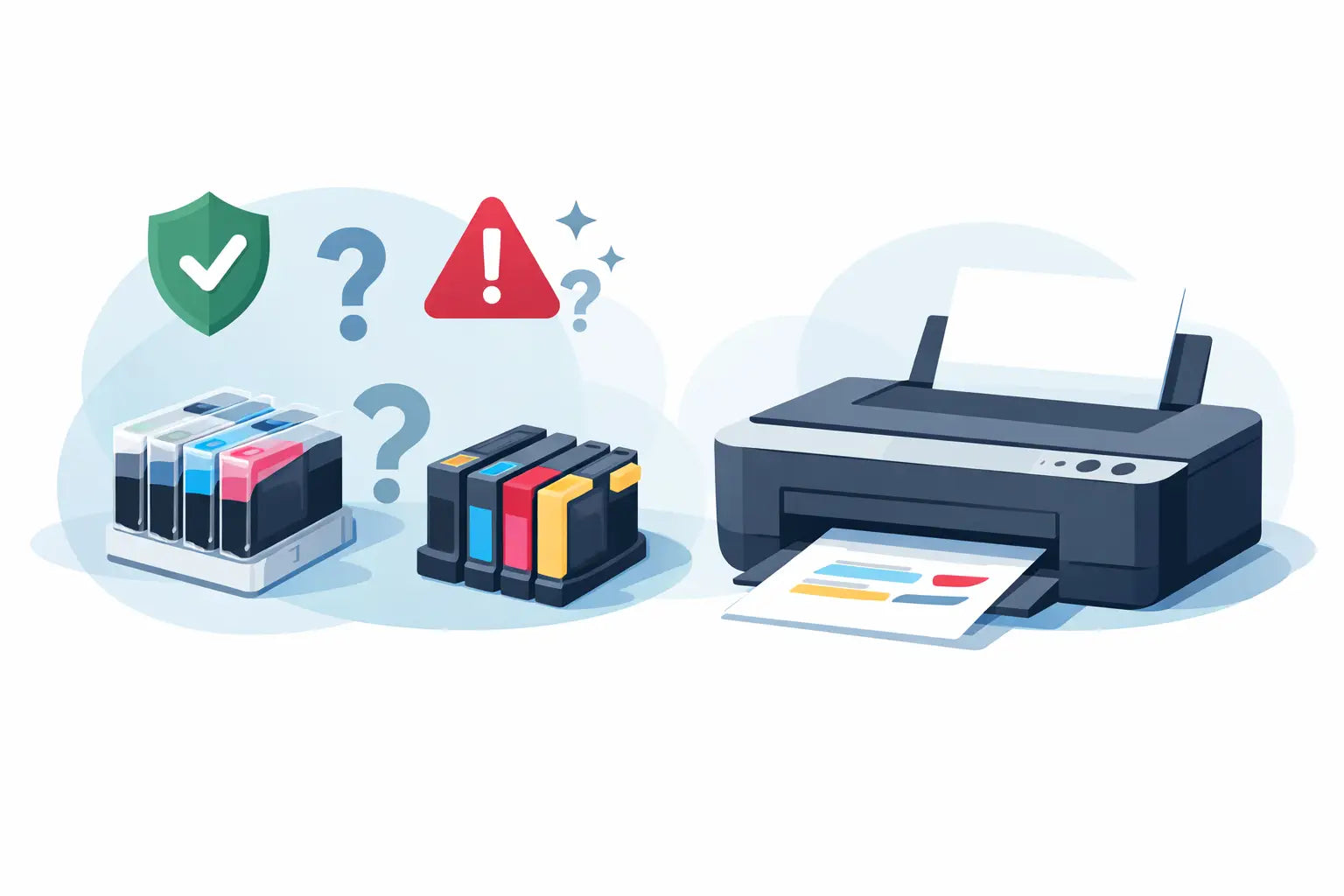
You are halfway through printing school forms, invoices or a last-minute return label when the low-ink warning pops up. Then comes the question most printer owners ask at some point: are compatible cartridges safe? It is a fair question, because nobody wants to save money on ink only to end up with streaky pages, error messages or a printer that refuses to cooperate.
The short answer is yes, compatible cartridges are generally safe when they are made properly and matched to the right printer. The longer answer is that safety depends on quality, fit and where you buy them. A well-made compatible cartridge can work reliably and deliver strong print results. A poorly made one can cause frustration, and that is usually where the bad stories come from.
Are compatible cartridges safe for your printer?
A compatible cartridge is a new cartridge made by a third-party manufacturer rather than the original printer brand. It is designed to fit and function like the genuine version, but at a lower price. That lower price is exactly why many home users and businesses consider them in the first place.
From a printer safety point of view, the main concern is whether the cartridge is built to the right specifications. If it is, it should install correctly, feed ink or toner properly and communicate with the printer as expected. If it is not, you may see issues such as poor print density, leaking, smudging or cartridge recognition problems.
That means the real issue is not simply whether a cartridge is compatible or genuine. It is whether the cartridge is well made. There is a big difference between a carefully manufactured compatible cartridge and a bargain-bin product with inconsistent quality control.
What people usually mean by “safe”
When customers ask if compatible cartridges are safe, they are usually talking about four things: printer damage, print quality, warranty concerns and overall reliability.
Printer damage is the biggest worry, but it is often overstated. A decent compatible cartridge is not designed to harm your printer. In most cases, if something goes wrong, it is more likely to be a print issue or recognition problem rather than serious hardware damage. Ink leaks can happen with low-quality cartridges, and toner cartridges with poor seals can create a mess, but that is a product quality problem rather than a built-in risk of all compatibles.
Print quality is where the difference between products shows up fastest. Some compatible cartridges produce crisp text and solid colour that suits everyday printing perfectly. Others may fall short on colour accuracy or consistency, especially for photo printing or branded marketing materials. If you are printing shipping labels, worksheets or internal office documents, a good compatible cartridge can be a sensible choice. If you need exact colour matching for client-facing materials, genuine cartridges may still be the safer bet.
Warranty concerns also cause confusion. Using a compatible cartridge does not automatically void your printer warranty under Australian consumer protections. A manufacturer cannot reject a warranty claim simply because you used a third-party cartridge. If they can show that the cartridge directly caused the fault, that is a different matter. In practice, this is one reason it pays to buy from a retailer that stands behind the products it sells.
Reliability matters because cheap printing is not really cheap if you are replacing dud cartridges, reprinting documents or wasting time troubleshooting. A cartridge that works properly from the start is worth more than the lowest price on the page.
Why some compatible cartridges work well and others do not
Not all compatible cartridges are equal. That is the part many shoppers miss.
A reliable compatible cartridge depends on several things going right behind the scenes. The casing needs to fit properly. The chip needs to communicate with the printer. The ink or toner formulation needs to suit the machine. The seals need to hold. If any one of those elements is off, the user sees the result quickly.
This is why source matters. Reputable suppliers tend to work with manufacturers that have tighter quality control and better consistency across batches. They also test products, provide compatibility guidance and offer support if something is not right. Random marketplace sellers often compete only on price, which can be where problems begin.
There is also a difference between printers. Some models are more tolerant of third-party cartridges, while others are fussier about chips and firmware updates. A cartridge that performs well in one printer family may be less reliable in another. That does not make compatibles unsafe across the board, but it does mean the right match matters.
Are compatible cartridges safe for inkjet and laser printers?
The answer is yes for both, but the risks look a little different.
With inkjet printers, the main concerns are clogged printheads, inconsistent colour and leaking. Ink chemistry matters here. If the ink is poorly formulated, it may not flow or dry the way it should. For printers with printheads built into the machine, that can be especially frustrating, because the printer itself is more exposed to poor-quality ink.
With laser printers, compatible toner cartridges are often judged on page yield, print sharpness and whether the cartridge fits and seals correctly. A badly made toner cartridge can produce backgrounding, patchy output or toner dust. Again, this is not a reason to avoid all compatibles. It is a reason to avoid low-quality ones.
If your printer is used heavily in a home office or small business, reliability matters even more than sticker price. A cartridge that saves money and keeps the printer running smoothly is doing its job. One that creates downtime is not.
When genuine cartridges may still make more sense
Compatible cartridges are a practical option for many households and workplaces, but there are times when genuine is worth considering.
If your printer is brand new and still within its early warranty period, you might prefer the simplicity of using original cartridges, especially if the machine is business-critical. If you print professional photos or design proofs, genuine ink may give you better colour consistency. And if you have had repeated issues with a particular printer model being picky about third-party chips, genuine cartridges can save time.
That said, many people use compatible cartridges for years without any trouble at all. It often comes down to how demanding your print jobs are, how often you print and how much value you place on lower running costs.
How to reduce the risk when buying compatible cartridges
If you want to use compatible cartridges safely, the best step is to buy carefully rather than buy blindly.
Check that the cartridge is listed for your exact printer model, not just the brand name. Printer families can have similar names but take different cartridges. Read the product description closely and make sure the supplier is clear about compatibility.
Choose a seller that offers proper customer support and a clear returns policy. That gives you backup if a cartridge arrives faulty or does not perform as expected. It also tells you the retailer is confident enough in the product to stand behind it.
Be cautious with prices that look too good to be true. Compatible cartridges should be cheaper than genuine ones, but extreme discounts can signal inconsistent manufacturing or old stock. Saving money is the point, but not if it creates avoidable hassles.
It also helps to install cartridges promptly and store spares properly in a cool, dry place. Even a quality cartridge can underperform if it has been left in poor conditions for too long.
So, are compatible cartridges safe enough to trust?
For most everyday users, yes. Compatible cartridges are safe enough to trust when they are sourced from a reputable supplier, matched correctly to the printer and made to a consistent standard. They can be a smart way to cut printing costs without sacrificing the results you need for regular documents, schoolwork, admin and office use.
The key is to think beyond the label. “Compatible” does not automatically mean risky, just as “genuine” does not always mean best value. Good buying decisions come down to the printer you own, the type of printing you do and the level of support behind the product.
If you want lower running costs without rolling the dice on quality, choose cartridges from a supplier that helps you find the right fit and backs that with real support. That is usually where confidence starts - not with the cheapest option, but with the right one.