
 Ink Brands
 Original Cartridge or Compatible Cartridge?
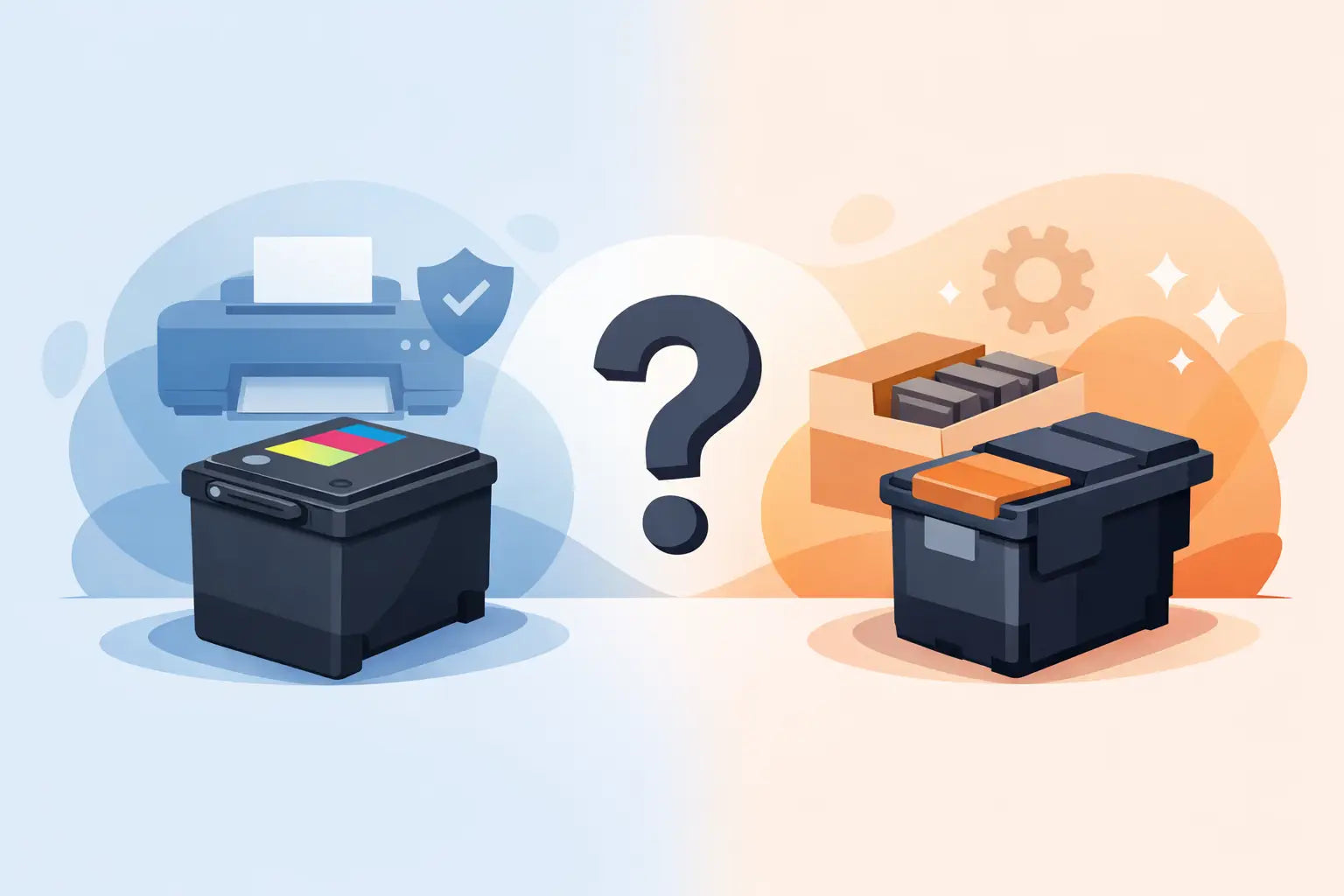
A replacement cartridge should be a simple purchase, but the price difference between options can make it feel anything but. When deciding between an original cartridge or compatible cartridge, the right choice comes down to your printer, what you print and how much you want to spend over time. Both can be sensible options. The key is knowing what you are getting before you place an order.
Why are original cartridges more expensive?
Original, or genuine, cartridges are made by the same brand that made your printer. For example, an HP cartridge is made for HP printers, while Canon, Epson and Brother each produce their own genuine ink and toner range.
The higher price does not only reflect the ink or toner inside. Printer manufacturers invest in cartridge development, printer testing, packaging, distribution and ongoing product support. Many printer brands also sell their hardware at a competitive price and recover more of their costs through replacement consumables. That is why a genuine cartridge can sometimes cost a surprising amount compared with the printer itself.
A compatible cartridge is made by a third-party manufacturer to fit and work with a specific printer model or cartridge series. It is not made by the printer brand, but a quality compatible is designed to provide a practical, lower-cost alternative. The savings can be substantial, particularly for homes, students, home offices and businesses printing regularly.
Price alone should not make the decision for you. A cartridge that is inexpensive but unsuitable for your printer or print requirements is not good value. Equally, paying the premium for genuine cartridges is not always necessary for everyday documents.
Original cartridge or compatible cartridge: the practical difference
The most useful comparison is not simply genuine versus aftermarket. Think about the type of work your printer does and the consequences if a print is not quite right.
When a genuine cartridge makes sense
Genuine cartridges are designed and tested by the printer manufacturer for that specific machine. They are a dependable choice when colour consistency, fine detail or specialised media matters. A photographer producing client prints, for instance, may prefer genuine photo inks because they want the printer, ink and paper system to behave as predictably as possible.
They can also suit workplaces with strict supplier policies, leased printer arrangements or manufacturer service agreements that require approved consumables. If your printer is still covered by a particular service plan, checking its terms before changing cartridge type is worthwhile.
For occasional home printing, genuine cartridges can also be the simplest choice if you value using the brand's own product and are comfortable with the higher upfront cost. There is no universal rule that says everyone should switch to compatibles.
Where compatible cartridges offer better value
For standard black-and-white documents, school assignments, invoices, shipping labels, forms and internal office paperwork, a quality compatible cartridge can be an excellent fit. It can deliver clear, readable pages while reducing the ongoing cost of ownership.
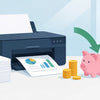
This matters more as print volume rises. Saving a modest amount on one cartridge may not seem significant, but the difference adds up across a year of reports, worksheets, receipts and admin documents. Small businesses with several people printing can often make their consumables budget go further by choosing compatible ink or toner for routine work.
Compatible cartridges are not all the same. Build quality, page yield and ink or toner formulation vary between suppliers. Buying from a specialist retailer that identifies cartridges by printer model and stands behind the products gives you more confidence than choosing an unknown option with little product information or support.
Start with what you print
Before choosing a cartridge, consider the output you actually need. This avoids paying for performance you will not use, or trying to save money in the wrong place.
If most pages are text documents, compatible black ink or toner is often the natural value choice. If you print occasional colour charts, school projects or household photos, a compatible colour set may also suit your needs well. Results can vary by printer and paper type, so use good-quality paper and choose the appropriate print settings for the job.
If you regularly print presentation materials, branded brochures, high-resolution photographs or colour-critical artwork, genuine cartridges may be worth the additional cost. Colour matching is especially important where a logo, product proof or professional image needs to look consistent from one print run to the next.
It is also worth considering frequency. Inkjet printers that sit unused for long periods can develop issues regardless of whether the cartridge is genuine or compatible. Printing a small colour page every week or two can help keep ink moving through the printhead. For low-use printers, buy a cartridge size that you are likely to use within a reasonable period rather than automatically choosing the largest option.
Check compatibility before you buy
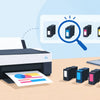
The most common cartridge mistake is ordering from the printer brand alone. One brand can have dozens of cartridge ranges, and two similar-looking models may use different cartridges. Always match the cartridge code and your exact printer model.
You will normally find the printer model on the front or top of the machine, while the cartridge code may be printed on the old cartridge, inside the printer cover or in the printer manual. If you are replacing a multi-pack, check that every colour listed is correct for your model.
Pay attention to capacity as well. Standard and high-yield cartridges are usually both compatible with the same printer, but high-yield versions contain more ink or toner and are generally better value per page for frequent printing. They cost more upfront, so they are most useful when you know the printer will get regular use.
For businesses, keeping a note of each printer model and cartridge code can prevent rushed orders and avoid downtime. A small stock of the most-used black cartridge is often enough to keep essential printing moving while a replacement is on its way.
What about printer warranties?
A common concern is that using a compatible cartridge will automatically void a printer warranty. In Australia, it is not that simple. Using a non-genuine cartridge does not automatically remove your consumer rights or cancel every part of a printer warranty.
However, if a manufacturer can show that a fault was caused by a particular non-genuine cartridge, it may not be responsible for repairing damage linked to that cartridge. This is one reason to avoid poor-quality, poorly fitted or unverified products. Keep your purchase records, follow installation instructions and contact the cartridge supplier promptly if something does not look right.
A trustworthy retailer should make support straightforward. At Inkspot, customers can shop by printer model and choose between genuine and compatible options with clear product information, helping take the guesswork out of reordering.
Make the choice that suits your printing
There is no prize for buying the most expensive cartridge, and no benefit in choosing the cheapest option without checking its suitability. Genuine cartridges are a strong choice for manufacturer-matched performance, specialised printing and situations where colour precision matters. Compatible cartridges are often the smarter everyday option for reliable documents and lower running costs.
Choose the cartridge that matches your printer model, printing habits and expectations, then buy from a supplier that offers clear compatibility details and support if you need it. That leaves you with what you wanted in the first place: a printer that is ready when you need it, without making every page cost more than it should.