
 Ink Brands
 Printing Costs: What You Pay and How to Cut Them
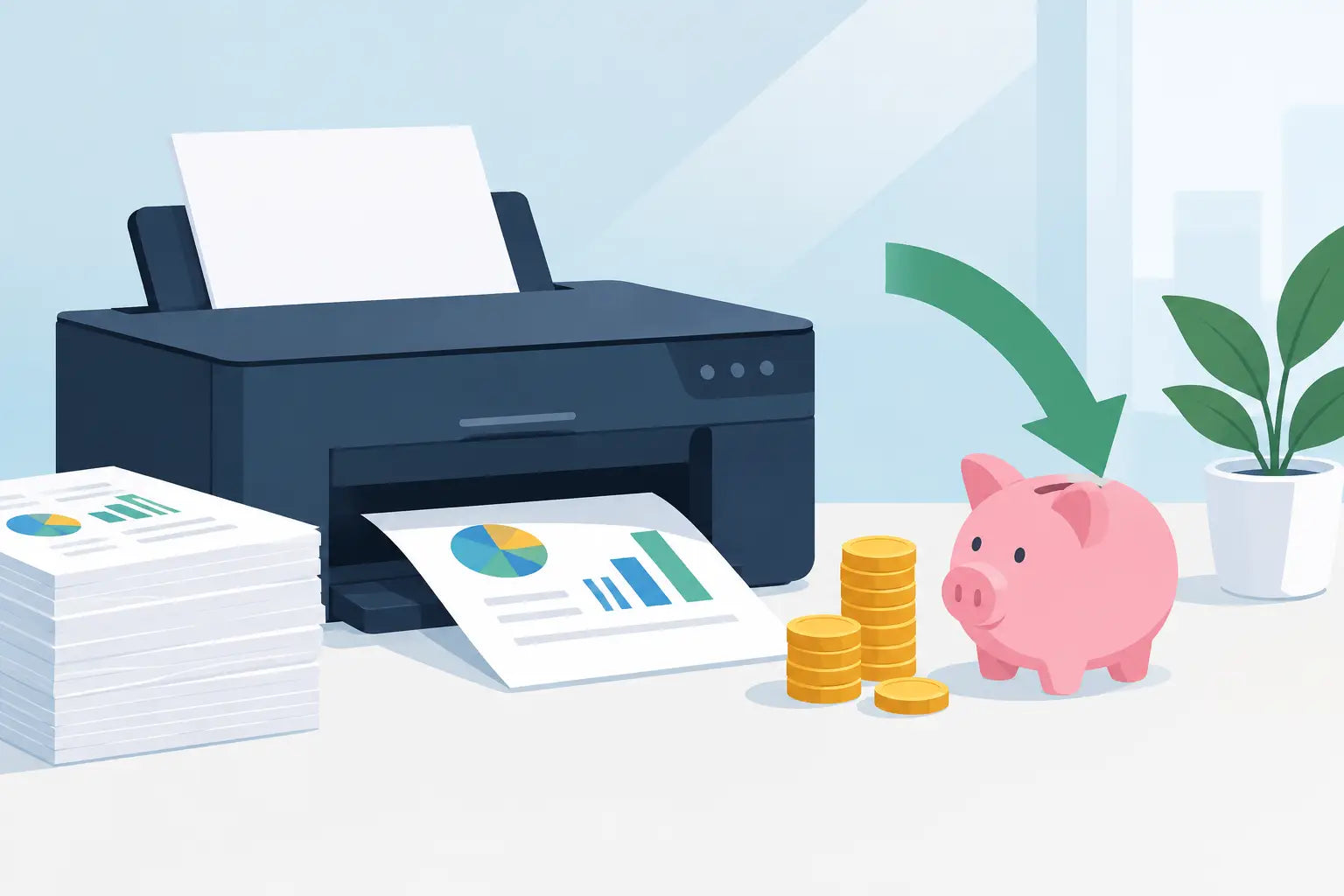
A $30 cartridge can feel expensive until it runs out after a handful of colour pages. A cheaper printer can feel like a bargain until it needs frequent replacements. That is why printing costs are best judged over months or years, not at the checkout. Whether you print school assignments at home or invoices in a busy office, knowing what you are paying for makes it much easier to spend wisely.
What Makes Up Your Printing Costs?
The cartridge price is the most visible cost, but it is only one part of the picture. Your true cost depends on how often you print, what you print, your printer settings, page coverage and whether you replace supplies before they are genuinely empty.
Ink and toner yield
Inkjet cartridges generally contain liquid ink and are common in home printers, while laser printers use toner powder and are often chosen for higher-volume document printing. Neither is automatically cheaper. The better fit comes down to your printing habits.
Cartridge yield matters more than the upfront price alone. Yield is the estimated number of pages a cartridge can print under standard test conditions, usually based on modest coverage per page. A black text document may use very little ink or toner. A full-page photo, brochure or colourful worksheet uses far more. If most of your printing includes images, graphs or coloured backgrounds, your real yield will be lower than the number shown on the box.
High-yield or XL cartridges often cost more initially but can offer a lower cost per page. They are usually a sensible choice for households with regular printing needs and businesses that get through supplies quickly. For an occasional printer user, a standard cartridge may be the more practical purchase, particularly if cartridges could sit unused for a long time.
Genuine versus compatible cartridges
Genuine cartridges are made by the printer manufacturer for its own machines. They are a straightforward choice for buyers who want the original branded product and consistent manufacturer specifications.
Compatible cartridges are made by a third party for use in a particular printer model. They can be considerably less expensive and are popular with cost-conscious home users and small businesses. A quality compatible cartridge can provide reliable everyday results, but product quality varies between suppliers. Buying from a specialist supplier with clear compatibility information, customer support and a returns policy is far safer than choosing solely on the lowest advertised price.
The right option depends on what you print. For internal documents, forms, draft material and schoolwork, compatible cartridges can make a meaningful difference to ongoing spend. For specialised work where colour matching, archival performance or manufacturer requirements are critical, genuine supplies may be the better fit.
The printer itself
A low purchase price does not necessarily mean a low-cost printer. Some entry-level printers use small cartridges that need frequent replacement, while models designed for heavier use may accept higher-yield supplies or use more economical ink systems.
Before replacing a printer, check the price and page yield of the cartridges it uses. If your current printer is reliable and its supplies are reasonably priced, keeping it may cost less than buying a new model. If you regularly print hundreds of pages, a printer with high-capacity toner or refillable tanks may reduce your long-term spend despite the higher initial purchase price.
How to Reduce Printing Costs Without Cutting Corners
Saving money does not have to mean settling for faint text or unreliable supplies. It usually comes down to matching the printer, cartridge and settings to the task at hand.
Print only what needs to be printed
The quickest way to reduce spending is to avoid unnecessary pages. Preview documents before printing, remove blank pages and select only the pages you need. For email records, travel details and reference documents, a saved PDF on your mobile or computer may be enough.
In an office, consider whether reports need full colour copies for every recipient. Printing a short colour cover page and the remaining pages in black and white can retain a professional look while using less colour ink or toner.
Use draft mode for everyday documents
Draft, economy or toner-save mode can reduce ink and toner use for internal documents. It is useful for proofreading, working drafts, notes and simple forms. The trade-off is lighter output, so switch back to normal or high-quality mode for customer-facing materials, important records and photos.
You can also set black-and-white printing as the default for documents that do not need colour. Many people use colour ink without realising a document contains a small logo, web link or coloured heading. Making monochrome your standard setting stops those small details from driving up colour cartridge use.
Choose the right paper and settings
Using photo quality settings on ordinary office paper wastes supplies and can leave pages looking over-saturated. Match the paper type and print setting to the job. Plain paper and standard quality work well for most letters, worksheets and invoices. Reserve premium paper and higher quality settings for photos, presentations or materials where appearance matters.
Double-sided printing can also lower paper use, filing space and postage weight. It will not reduce ink or toner per printed page, but it helps reduce the overall cost of producing multi-page documents.
Avoid replacing cartridges too early
Low-ink warnings are useful reminders, not always an instruction to replace a cartridge immediately. Many printers continue producing acceptable pages for a while after the warning appears. Check the output before ordering a replacement, especially if you only print occasionally.
For toner cartridges, a gentle horizontal shake can redistribute remaining toner and sometimes provide a little more usable life. Do this carefully and follow the cartridge instructions. Ink cartridges should not be shaken, as this can cause leaks or affect print quality.
Keep a spare cartridge on hand if a printer is essential to your work or household routine. It prevents a last-minute rush, but avoid stockpiling more than you can use. Ink cartridges have a limited shelf life, and storage conditions matter.
Common Habits That Increase Printer Spend
Printer maintenance can influence costs as much as purchasing decisions. Repeated cleaning cycles use ink, so only run a printhead clean when there is a genuine issue such as streaks, missing lines or poor colour output. If your inkjet printer is used rarely, printing a small test page every few weeks can help keep the printhead working properly and reduce the chance of blocked nozzles.
Leaving a printer switched on at the wall can also be more economical than regularly cutting its power. Many inkjet printers run a maintenance cycle when they start up, which may use ink. Use the printer's power button to turn it off properly rather than switching it off at the power point, unless the manufacturer advises otherwise.
Ordering the wrong cartridge is another avoidable expense. Printer brand alone is not enough because similar-looking models can use different cartridge series. Check the full printer model number, then confirm the cartridge code before buying. A printer-model finder can make this quicker and reduce the risk of an unnecessary return.
Finally, do not judge a cartridge by page count alone. A very cheap option that causes poor print quality, leaks or compatibility problems is not good value. Reliable supplies, clear product information and responsive local support are worth considering alongside price.
A Smarter Way to Buy Printer Supplies
Start with your printer model and the kind of pages you produce most often. Then compare standard and high-yield options by likely cost per page, rather than focusing only on the cartridge price. If colour printing is occasional, replacing individual colours as needed may suit you. If you print heavily, a high-capacity option can reduce both cost and the inconvenience of frequent replacements.
For Australian households and businesses, delivery also affects the real cost. Buying ahead when supplies are running low can help you avoid emergency purchases from a local shelf at a higher price. Inkspot makes this simpler with printer-model-based shopping, a choice of genuine and compatible cartridges, and free shipping on orders over $50.
A printer should be a useful tool, not a recurring surprise expense. Once you understand your usual page volume and choose supplies that match it, each replacement becomes a straightforward decision rather than an expensive guess.