
 Ink Brands
Label Printing Costs: What You’re Really Paying For
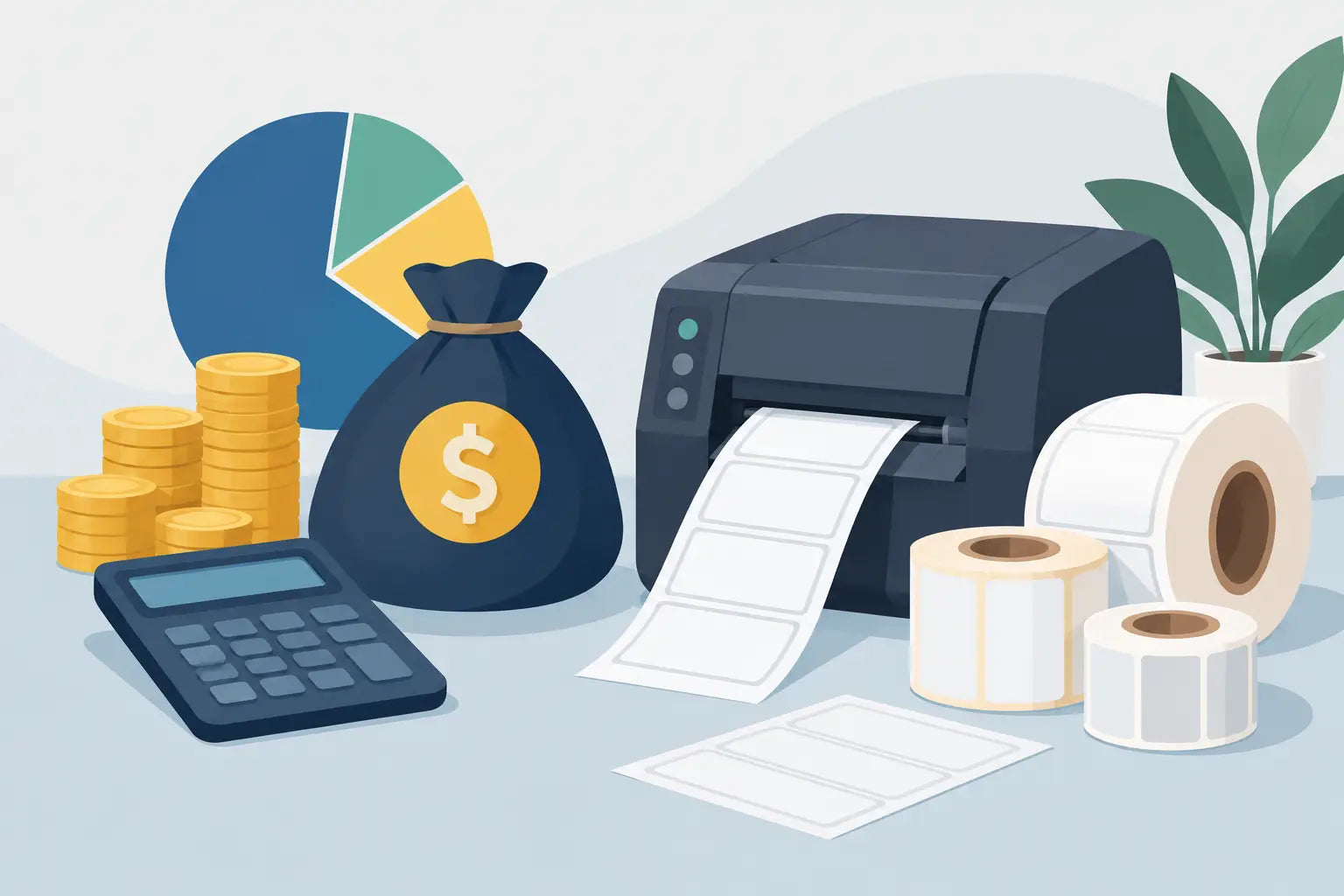
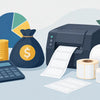
A shipping label that costs a few cents can become surprisingly expensive once reprints, wasted sheets, ink usage and staff time are included. Understanding label printing costs helps home businesses and busy offices make better choices before the printer becomes another hidden overhead.
For some businesses, labels are a daily essential: parcel labels, shelf tags, product labels, barcodes, return labels and filing stickers all need to be clear, durable and correctly sized. The cheapest label pack is not always the lowest-cost option if it smudges, jams or requires a second print. The goal is to look at the full cost per usable label, not just the price on the box.
What makes up label printing costs?
The cost of printing a label usually comes down to five areas: the printer, consumables, label stock, maintenance and waste. How much each one matters depends on your print volume and the type of labels you need.
An occasional home seller printing a handful of parcel labels each month has very different needs from a warehouse dispatching hundreds of orders a day. A small office may be best served by adhesive A4 sheets and an existing laser printer. A business printing large volumes of address or freight labels may save time and money with a dedicated thermal label printer.
Printer purchase price and lifespan
The printer itself is the first cost, but it should be spread across the number of labels you expect to print over its working life. A low-priced printer can be good value for light use, while a more capable machine may make financial sense when it avoids slowdowns, jams and frequent replacement.
Inkjet printers are versatile and useful when labels include colour branding, images or product information. They can be a practical choice if you already own one and print short runs. However, ink can be a larger part of the ongoing cost, particularly with full-colour designs or labels that require premium paper.
Laser printers are often economical for text-heavy labels, barcodes and black-and-white address labels. Toner is generally well suited to regular office printing and can produce crisp, quick results. Check that your label sheets are rated for laser printing, as unsuitable adhesive stock can cause peeling or leave residue inside the printer.
Thermal label printers work differently. Direct thermal printers use heat-sensitive labels and do not need ink, toner or ribbons. They are popular for shipping labels, but the printed image can fade with heat, sunlight or age. Thermal transfer printers use a ribbon to create more durable labels, which adds a consumable cost but is often the better option for stock labels, outdoor use or products that need to remain legible for longer.
Ink, toner and ribbons
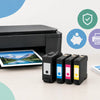
For inkjet and laser printers, consumables are often where the real spend sits. A cartridge that appears expensive may still offer a lower cost per page or label if it produces a high yield and reliable coverage. Conversely, a cheap cartridge is not a saving if it runs out quickly or creates streaky labels that cannot be scanned.
Coverage makes a major difference. A simple black address label uses far less ink or toner than a full-colour product label with a coloured background. If you print branded labels in volume, consider whether colour is necessary on every label or whether it could be reserved for customer-facing packaging.
Genuine cartridges are made by the printer manufacturer and can be the preferred option where a business needs consistency, specific colour output or manufacturer-backed consumables. Compatible cartridges can offer a lower upfront cost for many everyday printing jobs. The sensible choice depends on the printer, the importance of the label and the quality of the compatible product. Buying from a specialist supplier such as Inkspot can make it easier to find the right cartridge for your printer model without guessing.
Label stock and adhesive quality
Label stock is more than paper with sticky backing. The material, finish, adhesive and label size all affect price and performance.
Basic paper labels are cost-effective for internal filing, address labels and short-term parcels. Matte labels are often easy to write on and scan, while glossy labels can suit retail packaging where presentation matters. Synthetic labels cost more but can be worthwhile when moisture, handling, refrigeration or outdoor conditions are involved.
Adhesive is equally important. Permanent adhesive is suitable for most shipping and product labels, but removable labels are better for temporary pricing, storage tubs or items that may be reused. A label that falls off in transit or leaves a difficult residue can cost far more than the difference between two label packs.
Before ordering in bulk, check the exact dimensions, core size for rolls, printer compatibility and intended surface. Cardboard, plastic, glass and cold or damp packaging can all require different label materials.
How to calculate your cost per label
A simple cost-per-label calculation gives you a more useful number than the price of an individual cartridge or label roll. Add the cost of the label stock, consumables and a reasonable allowance for printer wear, then divide by the number of usable labels produced.
For example, if 100 A4 label sheets cost $30 and each sheet has 10 labels, your label stock cost is 3 cents per label. If your cartridge cost works out to 2 cents per printed label and you allow 1 cent for electricity, wear and occasional cleaning, the estimated cost is 6 cents per label. If one in every 20 labels is misprinted, your actual cost rises again.
For a thermal printer, the calculation may be simpler because there is no ink or toner for direct thermal printing. You would include the cost of the label roll, the printer cost spread over its expected output, and waste from setup or incorrect prints. For thermal transfer, add the ribbon cost as well.
Staff time is harder to measure but should not be ignored. If printing labels involves manually adjusting templates, finding the right sheet orientation and redoing failed jobs, the process can become costly even when materials are cheap. A consistent template and the right printer settings can save more than shaving a cent off each label.
The hidden costs that catch businesses out
Misaligned label templates are one of the most common sources of waste. Printing on plain paper first to confirm alignment is a small step that can prevent an entire sheet of labels going in the bin. Save tested templates clearly so everyone in the office uses the same settings.
Printer cleaning cycles can also increase ink usage. Inkjet printers that sit unused for long periods may run cleaning cycles or develop clogged nozzles, leading to wasted ink and poor print quality. If labels are printed only occasionally, print a small test page from time to time and store cartridges correctly.
Poor barcode quality creates another avoidable cost. A barcode that looks acceptable to the eye may not scan reliably if it is blurry, low contrast or printed on a heavily textured surface. Use black printing on a light, non-reflective label where possible, and test scan labels before committing to a large run.
Over-ordering is another issue. Bulk label packs can reduce the price per label, but only if the labels will be used before requirements change. Businesses that regularly alter product names, pricing or packaging may be better off buying smaller quantities and printing on demand.
Ways to reduce label printing costs without cutting corners
Start by matching the printer to the job. Use an existing inkjet or laser printer for low-volume, varied labels, but assess a thermal printer if you print shipping labels every day. The right equipment reduces both consumable use and admin time.
Keep designs efficient. White space is free, while large solid colour blocks use more ink or toner. A clean label with clear text, a readable barcode and only the necessary branding often prints faster and costs less than a heavily designed alternative.
Choose label sheets or rolls made for your printer type and feed them correctly. Trying to use unsuitable stock can lead to jams, crooked prints and damaged components. It also makes labels less likely to survive postage and handling.
Finally, monitor your actual usage for a month. Record labels printed, labels discarded, cartridge replacements and common print errors. That small amount of information will show whether your main cost is consumables, wasted stock or a process that needs simplifying.
The best label setup is rarely the one with the lowest ticket price. It is the one that produces clear, dependable labels at a predictable cost, with less reprinting and less time spent fixing avoidable problems.