
 Ink Brands
Do Ink Cartridges Expire? Storage and Shelf Life
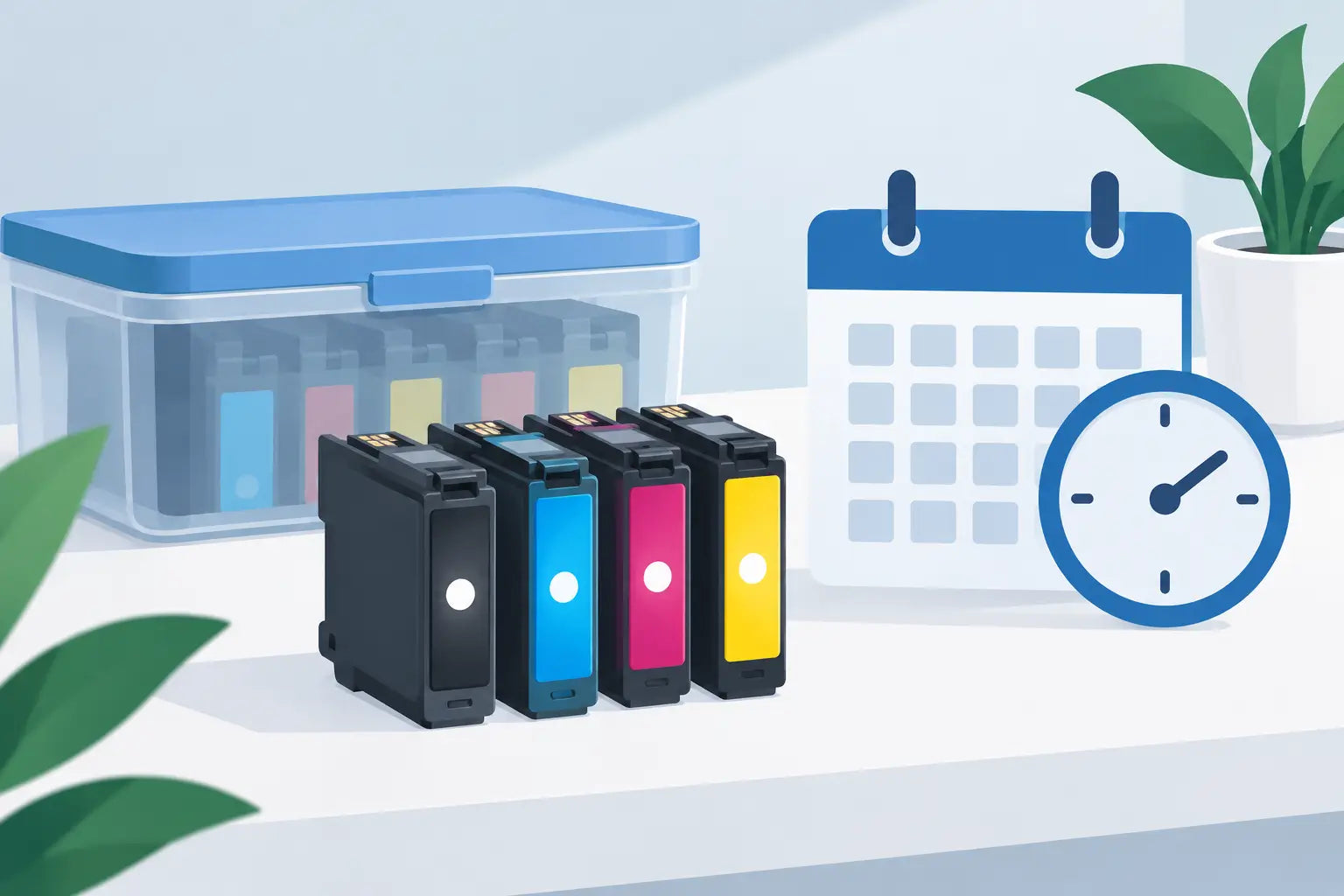
A spare cartridge found in the back of an office cupboard can feel like a win - until you spot a date on the box. So, do ink cartridges expire? In practical terms, yes: ink and toner have a usable shelf life. But the date does not always mean a cartridge becomes unusable overnight. How it has been stored, whether it is still sealed and the type of cartridge all affect the answer.
For most home users and businesses, the sensible approach is simple. Buy enough supplies to cover your normal printing needs, store them properly and use older stock first. That helps you avoid print-quality problems and keeps your printer ready when an urgent document, school assignment or customer order needs printing.
Do ink cartridges expire, or is the date only a guide?
Most manufacturers print a date on the packaging of genuine ink cartridges. Depending on the brand, this may be an expiry date, install-by date or warranty date. It is there because liquid ink can slowly change over time, even when the cartridge remains unopened.
Ink contains colourants, water or solvents, and ingredients that help it flow through extremely small printhead nozzles. As it ages, moisture can gradually escape and components can separate or settle. The result may be faded colours, streaking, missing lines or clogged nozzles. A cartridge used well past its recommended date may still print, but it is less likely to deliver the clear, consistent result you expect.
An unopened ink cartridge commonly has a shelf life of around 18 to 24 months from manufacture, though this varies by printer brand and cartridge type. Check the package for the most relevant date rather than relying on a general rule. If there is no date visible, the batch information or product documentation may help identify its age.
Toner cartridges generally last longer. Toner is a dry powder, so it is not exposed to the same drying risk as ink. A sealed toner cartridge can often be stored for two to three years, sometimes longer in suitable conditions. That said, toner can still be affected by heat, humidity and damaged packaging, so it should not be treated as permanent stock.
What happens after a cartridge's expiry date?
A date on a cartridge box is not a switch that turns it off at midnight. In some cases, a recently expired, correctly stored cartridge will print without any obvious issue. This is more likely with a sealed toner cartridge than with an ink cartridge.
The trade-off is reliability. If you are printing an occasional draft, it may be reasonable to try an unopened cartridge that is only a little past its date. Run a nozzle check or test page first, then inspect the text and colours. If the output is patchy, inaccurate or inconsistent after normal printer maintenance, replacing the cartridge is usually the more efficient choice.
For important documents, client materials, photographs or high-volume business printing, fresh stock is the safer option. A failed cartridge can waste paper, consume your time and, in some situations, contribute to blocked printhead nozzles. The small saving from holding onto very old ink is not always worth the interruption.
Some printers may also display a cartridge warning based on an internal date or the cartridge chip. This is separate from whether the ink inside can physically print. Follow the printer's message and your manufacturer guidance, especially if you need guaranteed results or are using a printer under warranty.
Opened cartridges have a shorter usable life
Once an ink cartridge is installed, air exposure and regular printer maintenance start to matter. Many manufacturers recommend using an installed cartridge within about six months. Again, the exact timeframe differs, so the packaging or printer manual should take priority.
A cartridge can dry out faster when a printer sits unused for weeks or months. The ink near the nozzles may thicken, causing gaps in printed lines. Printing a small page every week or two can help keep the system moving, particularly for inkjet printers that are used only occasionally at home.
Do not remove a partly used cartridge simply to save it for later unless your printer instructions specifically support this. Taking it out can expose the ink outlet or printhead area to air, and it may not reseal as effectively as an unopened cartridge. If you do need to remove one, protect it according to the manufacturer's instructions and reinstall it as soon as practical.
Toner cartridges do not dry out in the same way, but an opened toner cartridge should still be kept clean, dry and away from bright light. The imaging drum on some units is sensitive to light and can be damaged if left exposed.
How to store ink and toner cartridges properly
Good storage makes a real difference to cartridge shelf life. A hot shed, sunny windowsill or humid storeroom is not ideal. Australian summers can be particularly hard on printer supplies, especially in rooms without climate control.
Keep sealed cartridges in their original packaging and store them in a cool, dry place away from direct sunlight. A cupboard inside your home or office is generally a better choice than a garage, car boot or warehouse area that gets very hot.
For best results, follow these straightforward habits:
- Keep ink cartridges upright where the package indicates this position.
- Leave the protective clip, tape and foil packaging in place until you are ready to install the cartridge.
- Avoid extreme heat, freezing temperatures and sudden temperature changes.
- Store toner cartridges flat if the packaging recommends it, and give a newly opened toner cartridge a gentle side-to-side shake only when instructed.
- Use a first-in, first-out approach, placing newer purchases behind older ones.
Are compatible cartridges different when it comes to shelf life?
Compatible cartridges are designed to fit selected printer models and offer a lower-cost alternative to genuine OEM supplies. Their shelf life depends on the quality of manufacture, packaging and storage conditions, just as it does with genuine cartridges.
A well-made compatible cartridge that is factory sealed and stored properly should be used within the supplier's stated timeframe. Read the product details and retain your order information, particularly when purchasing supplies for multiple printers or stocking a small office. Buying from a specialist supplier also makes it easier to confirm compatibility before you open the packaging.
The most practical decision is based on how much you print. If your household prints a few pages every few months, avoid bulk-buying more ink than you can use within its recommended shelf life. If your business prints regularly, keeping a spare black cartridge and the relevant colour cartridges on hand can prevent downtime without creating unnecessary old stock.
When should you replace an old cartridge?
Replace a cartridge when it is leaking, its packaging is damaged, it has been exposed to significant heat or it produces poor results that normal maintenance cannot fix. For inkjet printers, start with the printer's nozzle check and cleaning cycle. Use cleaning cycles sparingly, as they consume ink, and stop if repeated attempts do not improve the page.
If an old cartridge appears sound but has been sitting for a long time, install it carefully and print a test page before relying on it. A readable result does not necessarily mean it is suitable for photo printing or presentation-quality documents, so match the cartridge to the job at hand.
When ordering replacements, search by your printer model rather than guessing from the appearance of the old cartridge. Many cartridges look similar but use different codes, chips or page-yield formats. Choosing the correct cartridge first time is the easiest way to avoid delays and unopened returns.
A cartridge date is best treated as useful planning information, not a reason to throw away a sealed item automatically. Store supplies well, test older stock before a critical print run and keep only the spares you are likely to use. That leaves you with clearer prints, less waste and one less last-minute printer problem to solve.