 Ink Brands
Genuine Printer Ink Review: Is OEM Worth It?
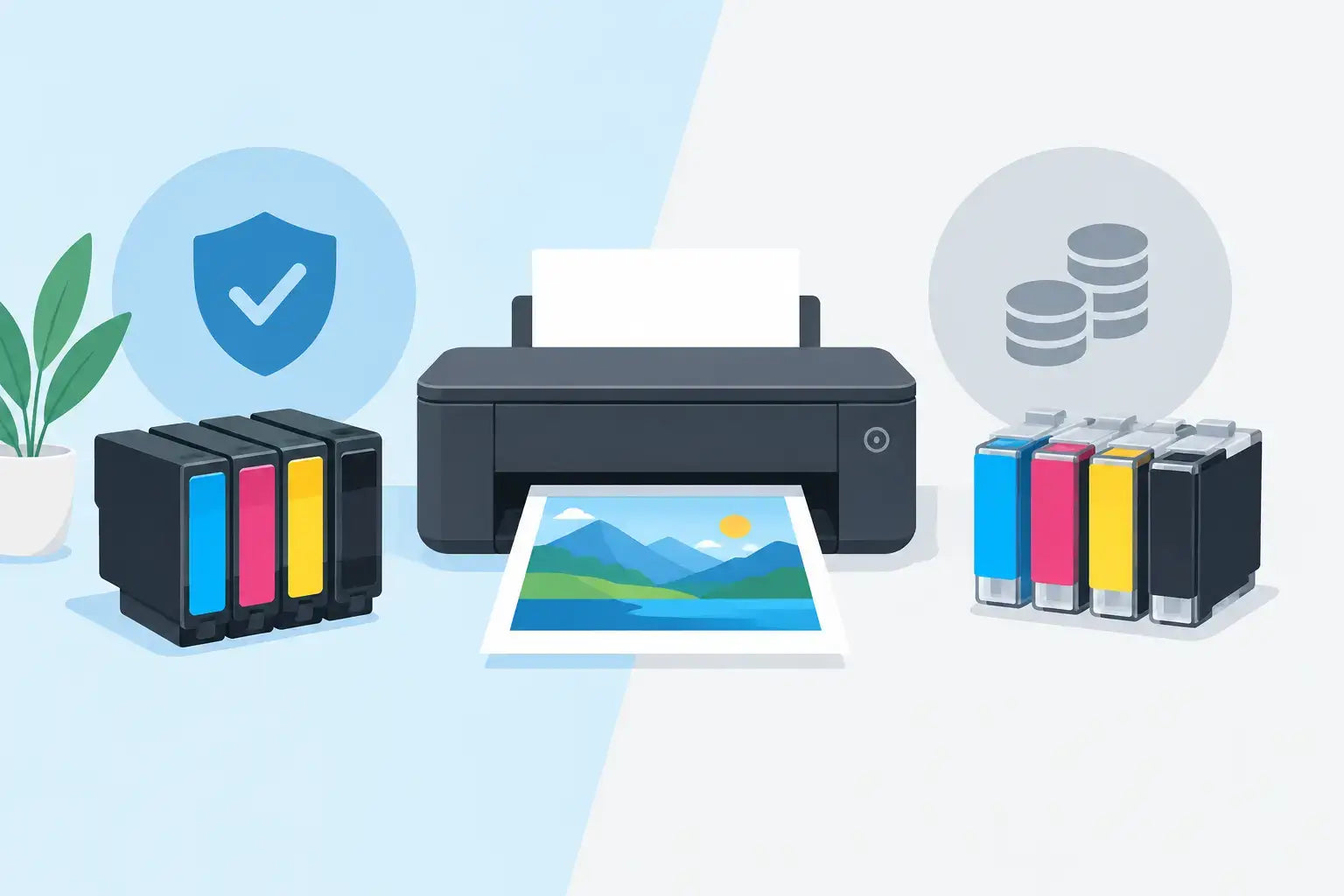
A cheap cartridge can look like an easy win until a deadline arrives, a photo prints with odd colours, or the printer refuses to recognise it. This genuine printer ink review looks at what you are actually paying for with original manufacturer cartridges, where they perform best, and when a compatible alternative may make better financial sense.
For many Australian households and small businesses, the answer is not simply “always buy genuine” or “always buy cheaper”. It depends on your printer, what you print, how often you print, and how much consistency matters to you.
What is genuine printer ink?
Genuine printer ink, also called OEM ink, is made by the same company that made your printer. An HP cartridge is made for HP printers, a Canon cartridge for Canon printers, and so on. The cartridge, ink formulation and printer software are designed to work together.
That matching is the central benefit. Printer manufacturers test their own ink against their printheads, paper settings and maintenance cycles. In most cases, you can expect the cartridge to install without fuss, report ink levels correctly and produce the colour and text quality intended for that model.
Genuine cartridges are usually the most straightforward choice for people who want certainty over the lowest possible upfront price. They are particularly common in workplaces that need dependable documents, homes printing family photos, and anyone using a newer or specialist printer.
Genuine printer ink review: the real advantages
The strongest case for genuine ink is consistency. You should get predictable results from cartridge to cartridge, whether you are printing sharp black text, school assignments, invoices or colour images. Colours are more likely to match the printer’s expected output, which matters when photos, branded material or presentations need to look right first time.
Reliability is another major factor. OEM cartridges are designed to communicate with the printer’s firmware, so installation and ink-level monitoring are generally simple. There is less guesswork over whether a cartridge chip will be accepted or whether a firmware update may affect recognition.
For printers that are used only occasionally, genuine ink can also offer reassurance. Inkjet printers can dry out if left unused for long periods regardless of the cartridge type, but an OEM cartridge removes one variable when you are trying to diagnose a print-quality issue. If the printer is still producing streaks or blank sections, you can focus on cleaning cycles, paper settings or the printhead rather than questioning cartridge compatibility.
Genuine ink is often the sensible option in these situations:
- You print photographs, marketing material or colour work where accurate shades matter.
- Your printer is new, expensive or used for specialised work.
- You need trouble-free output for client documents, legal paperwork or important records.
- You print infrequently and prefer the reassurance of manufacturer-matched supplies.
The downside: genuine ink is expensive
The main drawback is price. Printer manufacturers often sell entry-level printers at a very competitive price, then recover more of their margin through replacement ink and toner. That is why a full set of genuine ink cartridges can sometimes feel surprisingly expensive compared with the printer itself.
Cost per page can be high with standard-capacity cartridges, especially if you print regularly. A high-yield or XL genuine cartridge often costs more upfront but can be better value over its stated page yield. For an office that prints invoices, forms and reports each week, calculating cost per page is more useful than comparing shelf prices alone.
Page-yield figures should also be treated as a guide, not a guarantee. Manufacturers base them on standardised test pages with a set amount of coverage. A page full of photos, coloured backgrounds or large graphics uses far more ink than a simple black-text letter.
If your printer uses separate colour cartridges, you may only need to replace the colour that has run out. Printers with tri-colour cartridges can be less economical for some users, because one depleted colour may require replacing the entire cartridge even when other colours remain.
Are compatible cartridges a better buy?
Compatible cartridges are new cartridges made by a third party to suit a particular printer model. They are not refilled originals, although remanufactured cartridges are another option available for some printers. Quality varies between suppliers, which is why buying from a retailer that clearly identifies printer compatibility and supports its products matters.
A good compatible cartridge can provide very good everyday text and document printing at a lower cost than OEM ink. For students, home offices and small businesses producing routine internal paperwork, that saving can add up quickly. Many customers find compatible cartridges are perfectly suitable for bills, labels, forms, drafts and general colour printing.
The trade-off is that the result may not be identical to genuine ink in every printer or on every print job. Fine colour matching, photo longevity, ink-level reporting and firmware behaviour can vary. Some printers are more accepting of compatible cartridges than others, and very recent firmware updates occasionally create recognition issues with third-party options.
This is where your printing priorities matter. If you print 20 pages a month and want flawless photo output, genuine ink may be easier to justify. If you print hundreds of ordinary documents and need to manage running costs, a quality compatible option can be the more practical choice.
Will compatible ink affect your printer warranty?
This concern is common, and the short answer is that using a compatible cartridge does not automatically cancel your printer warranty. If a printer develops a fault, the manufacturer would generally need to show that the third-party cartridge caused that particular problem before refusing a warranty claim on that basis.
Still, it is sensible to keep receipts and choose cartridges supplied for your exact printer model. If a cartridge causes an issue, a reputable retailer should be able to help with troubleshooting, replacement or return options. Avoid cartridges with vague labels, unclear compatibility details or no local support, as the cheapest option can become costly if it does not work properly.
How to decide which cartridge suits you
Start with the printer model, not the cartridge number you remember buying years ago. Printer ranges often use similar-looking cartridges that are not interchangeable. Check the model printed on the front or top of the printer, then use a printer finder or compatibility list to confirm the correct cartridge.
Next, consider what you print. Genuine ink is a strong fit for high-value colour work, photographs and documents where consistency is non-negotiable. Compatible ink is often a smart fit for high-volume, everyday printing where the priority is reducing running costs.
Also consider cartridge capacity. A standard cartridge may be enough for occasional printing, but frequent users can save time and money with a high-yield version. Just be realistic about usage. Buying a large cartridge for a printer that sits untouched for a year may not be the best value if the ink dries before it is used.
For mixed needs, there is no rule saying every cartridge must be the same type. Some users choose genuine black ink for important text and a compatible colour set for everyday work, while others keep a genuine set on hand for photo printing. The best arrangement is the one that gives you the output you need without overspending.
A practical buying checklist
Before placing an order, confirm your printer model and cartridge code, decide whether standard or high-yield capacity suits your print volume, and think about the type of pages you print most. Check whether you need individual colours or a complete set, particularly if your printer has separate cartridges.
It also helps to buy from an Australian supplier with clear product information, responsive support and a straightforward returns process. Inkspot makes it easier to compare genuine and compatible options by printer model, so you can make a choice based on cost, compatibility and the work you need the printer to do.
Genuine ink earns its higher price through predictability, manufacturer matching and reliable colour output. Compatible ink earns its place by making routine printing far more affordable. Choose the cartridge that suits the next hundred pages you need to print, not just the lowest price displayed today.